English






What Is Weighted Moving Average? Everything You Need to Know
Want to know more about investing and trading? Along with other things, you'll be able to learn the fundamentals of the weighted moving average. Learn more information about weighted moving average.

 1933
1933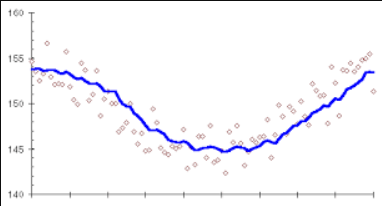
The direction of a trend is identified by the weighted moving average, a technical indicator. It produces trade signals by giving more weight to recent data points and less weight to historical data points.
Intro
A technical indicator is the weighted moving average (WMA) that gives recent data points more weight while giving older data points less weight.
The data set's numbers are multiplied individually by a predefined weight before being added together to get the WMA.
• Traders use weighted moving averages to provide trading signals that let them know when to purchase or sell equities.
What Is Weighted Moving Average?
A technical indicator that traders use to determine trade direction and whether to buy or sell is the weighted moving average (WMA). Recent data points are given more weight, whereas historical data points are given less weight. Each observation in the data collection is multiplied by a predefined weighting factor to get the weighted moving average.
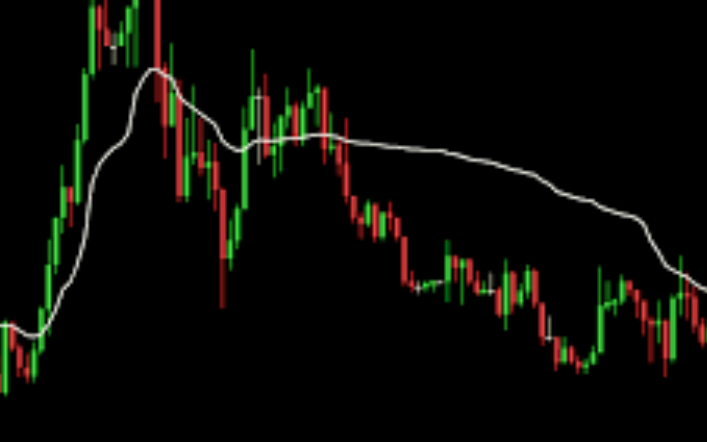
Traders to produce trade signals use the weighted average tool. For instance, the signal may be a signal to close off a trade when the price action advances toward or above the weighted moving average. But if the price action dips close to or just below the weighted moving average, It can indicate that it's time to make a transaction.
Using the weighted moving average is more accurate than the basic moving average, which gives every value in the data set the same weight.
How to Calculate the Weighted Moving Average?
Recent data points are given more weighting when calculating the weighted moving average, whilst historical data points are given less weighting. When the figures in the data set have various weights in relation to one another, it is used. The combined weights should equal 1, or 100% of the total.
From the simple moving average, it is different in that it gives each value equal weight. Compared to the simple moving average, the final weighted average value better captures the frequency of concurrency since it considers each data point's significance.
Example 1
A weighted moving average of four stock values is what we need: $66, $68,$69 and $70 with the first price being the most recent. Assume there are 10 periods.
Based on the provided data, the most recent period's weighting will be 4/10, the one before it will be 3/10, the one after it will be 2/10, and the first period's weighting will be 1/10.
The calculation will be made using the formula below the weighting average for the four different prices:
WMA = [70 x (4/10)] + [66 x (3/10)] + [68 x (2/10)] + [69 x (1/10)]
WMA = $28 + $19.80 + $13.60 + $6.90 = $68.30
Weighted Moving Average Formula
The weighted moving average formula is written as follows:
Where: N is the time frame.
How Does The Weighted Moving Average Works?
Let's look at how you can utilize this indicator for your trades now that you understand how to determine the weighted moving average of a given set of values:
When the price is above its weighted MA line, it typically indicates that the asset is trading higher than it has on average for the reviewed period. It further supports an upward trend. Alternatively, a downtrend is confirmed when the price is below the WMA line.
A rising weighted MA can be used to highlight regions of support and resistance for price activity. At the same time, a declining WMA can signal price action resistance for a certain period. Traders place buy orders when the price is close to the rising weighted MA, and sell orders when the price is close to the falling weighted MA frequently use this.
Price activity above its moving average is used to confirm price strength and market momentum. Since the most recent prices now sit higher than the average, this indicates that the market is becoming more powerful than it was previously. On the other hand, price movement below its moving average indicates that the market is becoming weaker in comparison to earlier levels.
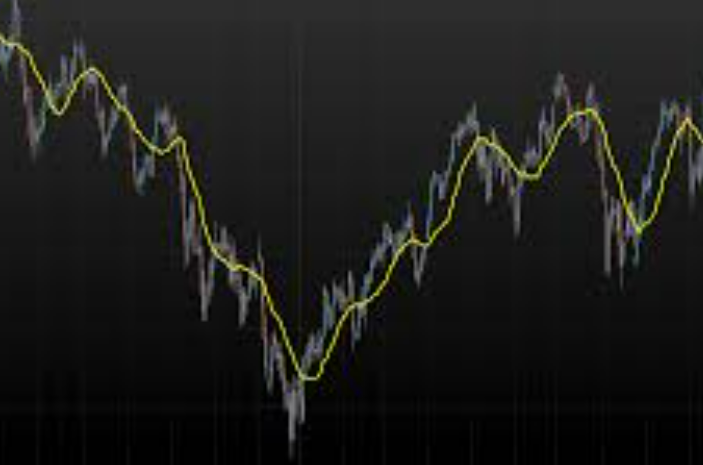
To gauge price changes - The weighted moving average is a superior indicator. It can spot trends earlier than the simple moving average since it is typically more sensitive to price movement. It is a potential disadvantage because the WMA is more likely to experience volatility than the matching SMA.
The WMA can be used in conjunction with other technical indicators, such as Keltner Channels, to identify the best trade signals. When there is a price pullback from the peak of the Keltner Channel, and the market is uptrending, traders might join the market close to the WMA.
Weighted Moving Average Trading Strategies
1. Triple Moving Average Crossover Strategy
The triple moving average approach plots three separate moving averages to create buy and sell signals. Compared to the dual moving average crossover technique, this moving average strategy is more capable of coping with erroneous trade signals. The trader can determine if the market has genuinely experienced a change in trend or whether it is simply pausing briefly before returning to its previous state by comparing three moving averages with different lookback periods. A purchase signal is formed early in a trend's development, and a sell signal is generated early in a trend's demise.
The signals they produce are either confirmed or disproved using the third moving average in conjunction with the other two moving averages. The likelihood that the trader will act on misleading signals is decreased as a result.
The moving average follows the price curve more closely the shorter its period. Faster moving averages (short term) will start rising far earlier than the slower moving averages when security enters an uptrend (long term). Assume that security has increased in value by the same amount every day for the previous 60 trading days before starting to drop for the following 60 days. The 20-day and 30-day moving averages will begin to decrease on the eleventh and sixteenth trading days, respectively, while the 10-day moving average will begin to decline on the sixth trading day.
The length of time a trend has previously endured affects how likely it is that it will continue. For this reason, initiating a trade too early could result in being forced to leave the position at a loss after entering on a false signal, whilst waiting too long to enter trade results in missing out on much of the gain. Trading strategies like the triple moving average crossover try to ride the trend for precisely the correct amount of time while avoiding false signals in order to handle this problem.
We'll utilize the 10-day, 20-day, and 30-day simple moving averages shown in the chart below to illustrate this moving average method.
Depending on the time frames the trader wants to trade in, different moving averages should be employed for different lengths of time. Due to its propensity to closely track the price curve, an exponential moving average is favored for shorter time frames (one-hour bars or faster) (e.g., 4, 9, 18 EMA or 10, 25, 50 EMA). Traders prefer moving averages for longer time frames (daily or weekly bars) (e.g., 5, 10, 20 SMA or 4, 10, 50 SMA). The moving average periods change depending on the trader's technique and the security being traded.
Think about where the three moving averages change direction in the above chart at point "A." The purple line indicates the slow-moving average, the green line the medium-moving average, and the red line the fast-moving average (10-day SMA) (30-day SMA). There is a signal to sell when the fast-moving average crosses below the medium and slow-moving averages. The average price for the past 10 days has decreased below the average price over the past 20 and 30 days, indicating a short-term change in the trend.
A sell signal is indicated when the medium moving average crosses below the slow moving average. The momentum change is deemed to be more severe when the medium moving average (20 days) crosses below the slow moving average (30 days).
When the slow-moving average is higher than the medium moving average and the medium moving average is higher than the fast-moving average, the triple moving average crossover technique gives a signal to sell. The system leaves its position when the fast-moving average crosses over the medium-moving average. Due to this, the triple moving average trading system is less common than the dual moving average trading system. The product is no longer available when the slow and medium moving averages do not match the relationship between the medium and rapid moving averages.
Aggressive traders would take positions based on the fast-moving average crossing over the slow and medium-moving averages rather than waiting for the trend to be confirmed. Additionally, positions may be entered at various points. For instance, a trader may take a certain number of long positions when the fast MA crosses above the medium MA, another set of long positions when the fast MA crosses above the slow MA, and then add long positions when the medium crosses over the slow MA. He can quit his position at any time if a trend reversal is seen.
2. Moving Average Ribbon
The Moving Average Ribbon is a more advanced variation of the Moving Average Crossover technique. This moving average approach is produced by overlaying numerous moving averages on the same chart (the chart below uses 8 simple moving averages). When choosing the lengths and types of moving averages, one must consider their time horizons and investing goals. A strong trend is one in which all the moving averages move in the same direction. Similar to how the triple moving average crossover system generates trading signals, the trader must choose the number of crossovers necessary to initiate a buy or sell signal.
When the quicker moving averages cross over the slower moving averages, traders look to buy, while they look to sell when they do the opposite.
3. Moving Average Convergence Divergence (MACD)
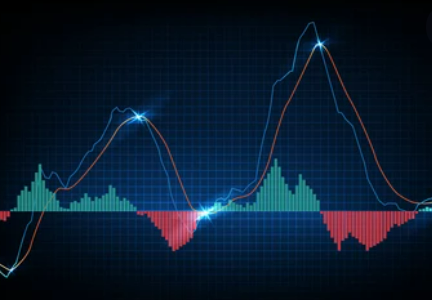
Anchor The moving average convergence divergence, or MACD, is a momentum trend indicator. It consists of three-time series that have been combined and produced as moving averages using past price data, most frequently closing price. The difference is shown by the MACD line between the closing price of a particular security's fast (short-term) exponential moving average and its slow (long-term) exponential moving average. The MACD line's exponential moving average serves as the signal line. The trader searches for crossovers between the MACD and the signal line while using this moving average approach.
The three elements that make up the MACD strategy are represented by the letters MACD(a,b,c), where the MACD series is the difference between the EMAs with the periods "a" and "b." The MACD series' EMA, which serves as the signal line, has a period of "c." The most popular MACD technique uses a 9-day EMA for the signal series, which is represented by MACD, and 12-day and 26-day EMAs for the MACD series (12, 26, 9). Based on these input parameters, the chart below was generated.
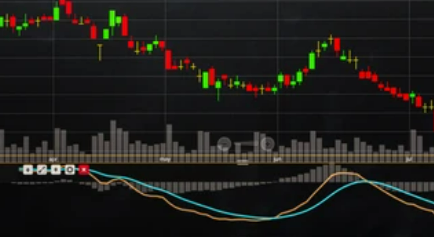
MACD line is created by subtracting the closing price's 26-day EMA from its 12-day EMA. Line of signals = 9 days MACD line EMA MACD line plus signal line equals a histogram.
The daily closing price (blue line), 12-day EMA (red line), and 26-day EMA are all displayed in the chart's upper half (green line). The MACD Series (blue line), the Signal Series (red line), and the MACD histogram (black vertical lines) are all plotted in the lower half of the chart, respectively. The MACD Series is calculated by subtracting the fast-moving average (12-day EMA) from the slow-moving average (26-day EMA), while the Signal Series is calculated by taking a 9-day EMA of the fast-moving average.
The MACD chart can be interpreted in a variety of ways. The MACD line crossing over the signal line is the signal trigger that is most frequently employed. It is advised to buy the underlying security when the MACD line crosses above the signal line and to sell the security when the MACD line passes below the signal line. These occurrences are interpreted as indicators that the underlying security's trend is set to intensify in the crossover direction. The zero crossovers is a different crossover that traders take into account. This happens when the price curve's slow and fast-moving averages cross over or when the MACD series reverses sign.
Bearish signs are those that go from positive to negative, while bullish signs are those that go from negative to positive. Although the zero crossovers confirm a trend change, it is less dependable than the signal crossover at generating signals. The histogram's ability to show the divergence between the MACD line and the signal line is another indicator that traders watch. The trend wanes when the histogram begins to decline (move towards the zero line); this occurs when the MACD and signal lines are convergent.
The histogram rising (moving away from the zero line) or the signal line and MACD line diverging, however, are signs that the trend is increasing.
The MACD can produce erroneous signals, just like other moving average algorithms that are employed to forecast trends. A false positive occurs when a bullish or bearish crossover is followed by a sharp decrease or increase in the underlying security, respectively. When there is no crossover yet the stock rapidly accelerates either upwards or downwards; that is a false negative.
Weighted Moving Average vs. Simple Moving Average
The two most popular statistics in the world for determining the average of observations in a data collection are the simple moving average and the weighted moving average.
A simple moving average estimates the average by adding up all the observations in a data set and dividing the outcome by the overall sample size, which is the primary distinction between the two statistical measures. Simply said, it gives each observation in the sample the same amount of weight.
The most recent observation is given a greater weight than those from the distant past in order to calculate the average, whereas weighted moving average applies a specified weight or frequency to each observation.
The Bottom Line
Understanding is vital for traders how to combine the weighted moving average with other technical indicators. Having said that, one kind of moving average isn't inherently superior to another because they only use various techniques to calculate average pricing. Therefore, the optimum type of MA will ultimately depend on your trading approach. Additionally, think about significantly modifying your settings for each market; you might find that a 50-period WMA works really well on one stock but not so well on another. To get the best results from your trades, you must understand how to use and interpret the WMA, just like you would with any other instrument.


Trending Articles
- Who Is Andrew Tate and Why Is He Famous? 10 Things to Know the Controversial Influencer
Discover who is Andrew Tate and why he's making waves in the digital sphere. Uncover 10 intriguing facts about this controversial influencer, his journey, and his impact on the online world.
2024-03-01 TOPONE Markets Analyst - Andrew Tate Net Worth 2024: Is the Internet's Most Controversial Man Worth $800 Million?
Explore the enigmatic Andrew Tate's net worth and delve into the controversies surrounding the internet's most polarizing figure. Is he truly worth $800 million? Uncover the truth behind his wealth and reputation here.
2024-02-23 TOPONE Markets Analyst - 20 Strongest Currencies in the World in 2024
Want to know the strongest currencies in the world in 2024? Here are the list for you!
2024-01-30 TOPONE Markets Analyst - Falling Wedge Pattern: The Ultimate Guide
A falling wedge is a bullish pattern characterized by a wide top and shrinking bottom. It is an extremely bullish pattern in a trading market.
2023-09-25 TOPONE Markets Analyst

 Bonus!

Bonus rebate to help investors grow in the trading world!