English






Interest Rate Cut Hurdles? This Week's Major NFP and PCE Data Could Be Key Factors
U.S. stocks are approaching all-time highs. The market trend in early November this week will be affected by PCE inflation data, the October non-farm payrolls report and the financial reports of Alphabet, Apple, Amazon, Microsoft and Meta.

 9125
9125



Introduction
Last week, strong gains in Tesla's stock price pushed the Nasdaq up slightly by 0.9%, nearing its all-time high. However, the S&P 500 and Dow Jones Industrial Average fell 0.3% and 2.6%, respectively.
Looking ahead to this week, U.S. third-quarter economic growth data, job openings, the latest developments in the services and manufacturing industries, and consumer confidence index will be released.
In addition, the corporate earnings season will also reach its climax, with 169 S&P 500 companies expected to announce quarterly results. Among these companies, the financial reports of Ford, AMD, McDonald's, Eli Lilly and Exxon Mobil are particularly eye-catching.
The Current State of the U.S. Economy
Recently, the market generally expects that the U.S. economy is expected to achieve a so-called "soft landing." That is, the inflation rate drops to the 2% target set by the Fed while economic growth remains stable.
In the coming week, a number of key economic data will verify investors' expectations. First, the U.S. Bureau of Economic Analysis plans to release its preliminary estimate of third-quarter GDP on Wednesday. The market generally expects the U.S. economy to maintain solid growth. Annualized growth is expected to be 3%, unchanged from the second quarter.
Then on Thursday, the latest data on personal consumption expenditures (PCE), an inflation gauge closely watched by the Fed, will be released. Economists expect annual core PCE growth, which strips out food and energy price swings, to fall slightly to 2.6% in September from 2.7% in August. The month-on-month growth rate is expected to rise to 0.3% from 0.1% last month.
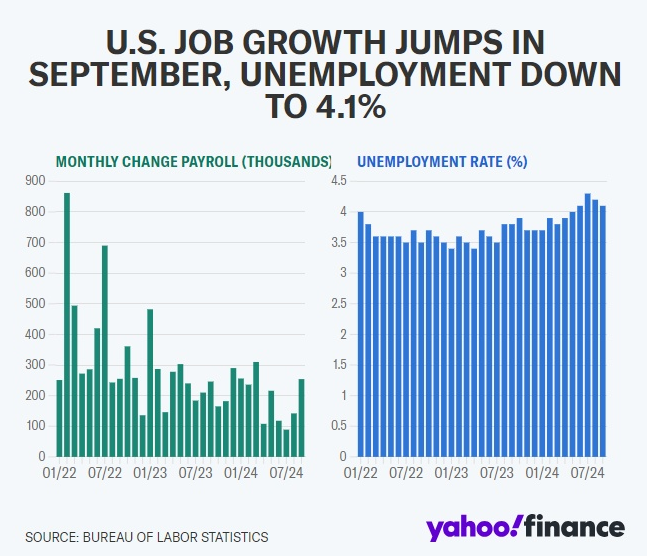
The U.S. Bureau of Labor Statistics will release its latest job market report on Friday. According to forecasts, U.S. non-farm employment is expected to increase by 125,000 in October, and the unemployment rate is expected to remain unchanged at 4.1%. In September, 254,000 new jobs were created and the unemployment rate fell to 4.1%.
Michael Reid, of RBC Capital Markets, noted in a note last week that the October jobs report is expected to contain a lot of noise given the impact of hurricanes, strikes and back-to-back furloughs. He emphasized that the unemployment rate will be the best indicator of labor market conditions this month.
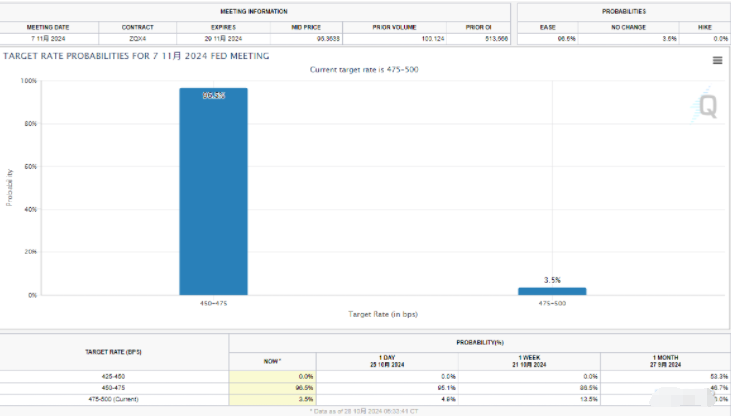
Against the backdrop of this intensive release of economic data, the market expects the probability of the Federal Reserve to cut interest rates at its November meeting as high as 96%, according to the Chicago Mercantile Exchange's FedWatch tool.
Tech Titans Concentrate on Releasing Quarterly Reports
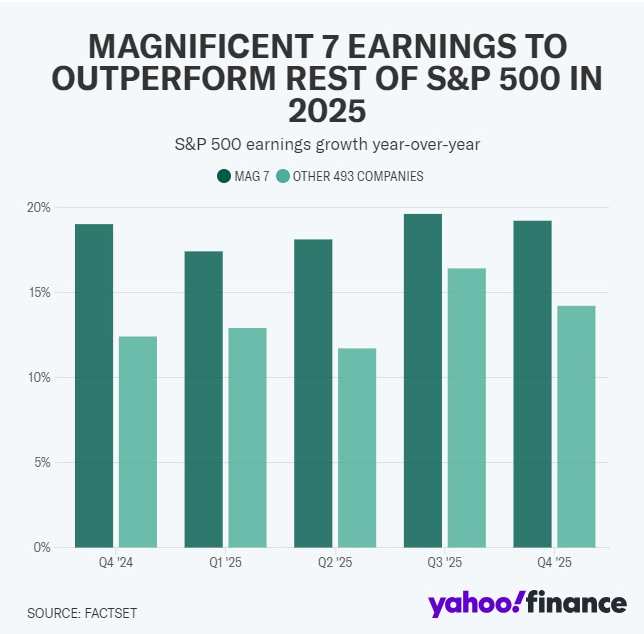
So far, more than one-third of the companies in the S&P 500 Index have announced their latest quarterly performance reports. According to disclosed data, the index's annualized earnings growth rate is 3.7%. According to FactSet data, this will be the slowest growth rate since the second quarter of 2023.
Earnings reports from major tech companies in the coming week will validate this trend. FactSet noted that the so-called "Seven Sisters" of technology stocks - the seven largest technology companies in the market - are expected to see annualized earnings growth of 18.1% year over year this quarter. While earnings for the other 493 companies in the S&P 500 are expected to rise just 0.1%.
The recent rebound in technology stocks has brought the stock prices of technology giants such as Apple, Alphabet, Amazon, Meta, and Microsoft to near all-time highs. The companies are expected to release quarterly earnings this week, potentially once again thrusting emerging technologies such as artificial intelligence into the center of market attention. Investors can pay close attention to these companies' investments in emerging technologies and their earnings performance.
However, considering the recent significant gains in large-cap technology stocks, Nancy Tengler, CEO and chief investment officer of lafer Tengler Investments, reminded investors that the market reaction after the earnings report may not be enthusiastic. Tengler pointed out: "Even for a company like Microsoft, which historically has a 76% probability of beating expectations, its stock price may not fluctuate much."
Rising U.S. Treasury Yields Aren't All Bad
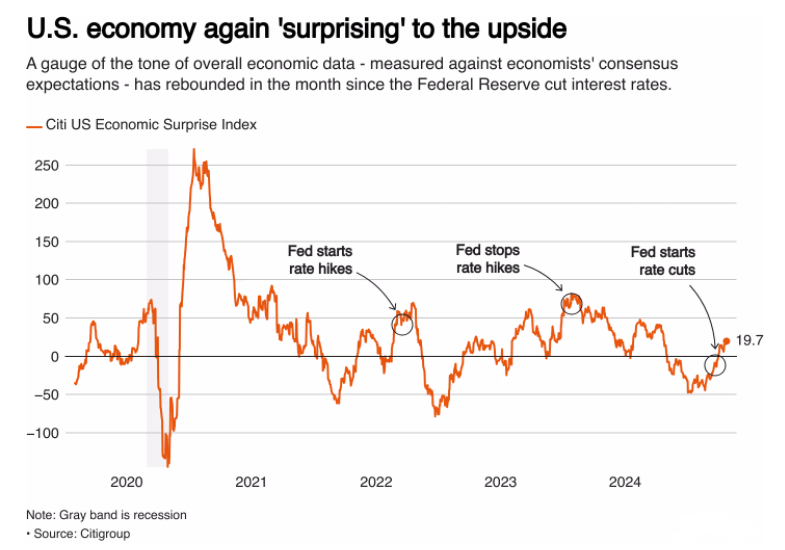
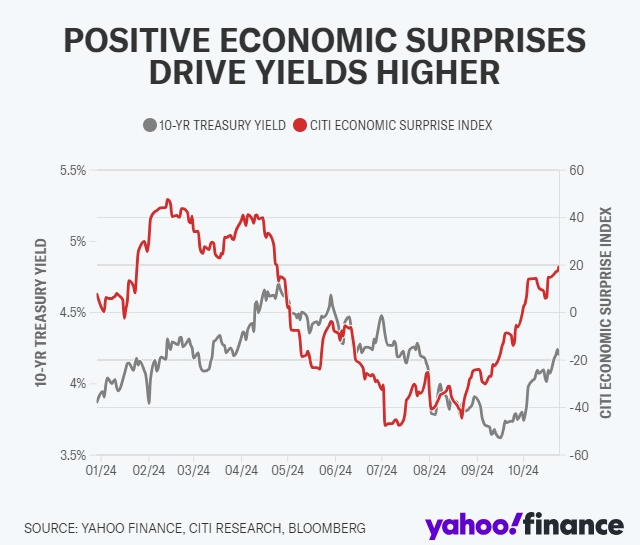
Over the past month, U.S. economic data has defied Wall Street expectations. The Citi Economic Surprise index, a gauge of U.S. economic data, has surged to its highest level since April.
Meanwhile, the yield on the 10-year U.S. Treasury note is also climbing. It has risen approximately 50 basis points over the past month, approaching the 4.2% level. In some cases, rising Treasury yields could weigh on stocks. But Callie Cox, chief market strategist at Ritholtz Wealth Management, noted in her analysis that this could still be a positive sign for stocks if rising yields are accompanied by stronger economic growth.
This point was also emphasized by Gargi Chaudhuri, chief investment and portfolio strategist for the Americas at BlackRock. She said: "Gradual increases in yields have historically been beneficial to companies that are growing earnings if based on expectations for economic growth. Therefore, maintaining the quality of the portfolio remains critical."
This Week's Major NFP and PCE Data May See a Surge.
The market generally expects that the U.S. economic growth rate will remain at 3% in the third quarter, showing the soundness of the economy. This may have a positive impact on the upcoming PCE and non-farm payrolls data.
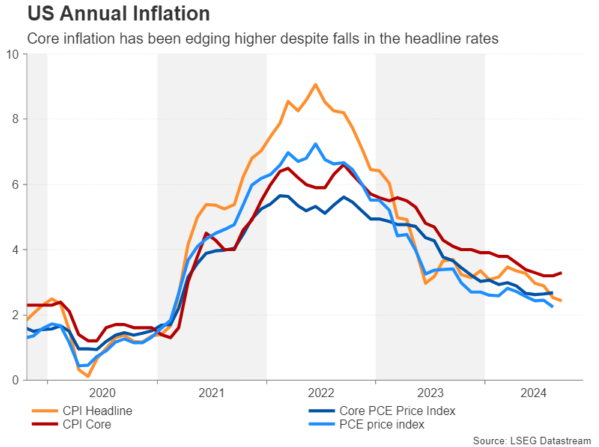
At the same time, economists predict that core PCE growth in September may drop slightly from 2.7% to 2.6% year-on-year, suggesting that inflationary pressures have eased. However, if the actual inflation data is lower than expected, it may prompt the market to re-evaluate the direction of the Fed's policy.
In addition, non-farm employment is expected to increase by 125,000 in October, with the unemployment rate remaining at 4.1%. If the actual data is better than expected, it may indicate a stronger job market, thus pushing up the non-farm payroll data. The spike in the Citi Economic Surprise Index reflects strong expectations that U.S. economic data may beat expectations, which could lead to an intensified market reaction when the data is released.
Meanwhile, a rise in the 10-year Treasury yield could be a positive sign for stocks if it keeps pace with economic growth. This may be reflected in PCE and non-agricultural data.
Finally, the market's high expectations for the Federal Reserve to cut interest rates at its November meeting may be adjusted with strong economic data, which will affect the performance of PCE and non-farm data. Therefore, a positive change in any one or more of these factors could lead to a spike in this week's big non-farm payrolls and PCE data.
Hidden Opportunities for Investors
Once the non-farm payrolls and PCE data surge, it will inevitably affect the Fed's subsequent interest rate cut policy. Not only will it slow down the pace of interest rate cuts, it may also cause it to interrupt interest rate cuts.
Traders ruled out another 50 basis point rate cut after a September jobs report that was much stronger than expected. The market currently sees a 96.5% chance of a 25 basis point rate cut next week and a 3.5% chance of a pause, according to London Stock Exchange Group (LSEG) calculations.
The interest rate futures market is pricing in another 43 basis points of rate cuts in 2024. The situation suggests the Fed may pause its rate cuts in December.
And closely related to interest rate cuts is gold.
From a technical analysis perspective, the December COMEX gold market has recently shown strong bullish strength. Bulls will aim to push the price above the key resistance level at $2,800.00 and hold above it. Conversely, the bears are looking to sink the price below the strong support at $2,650.
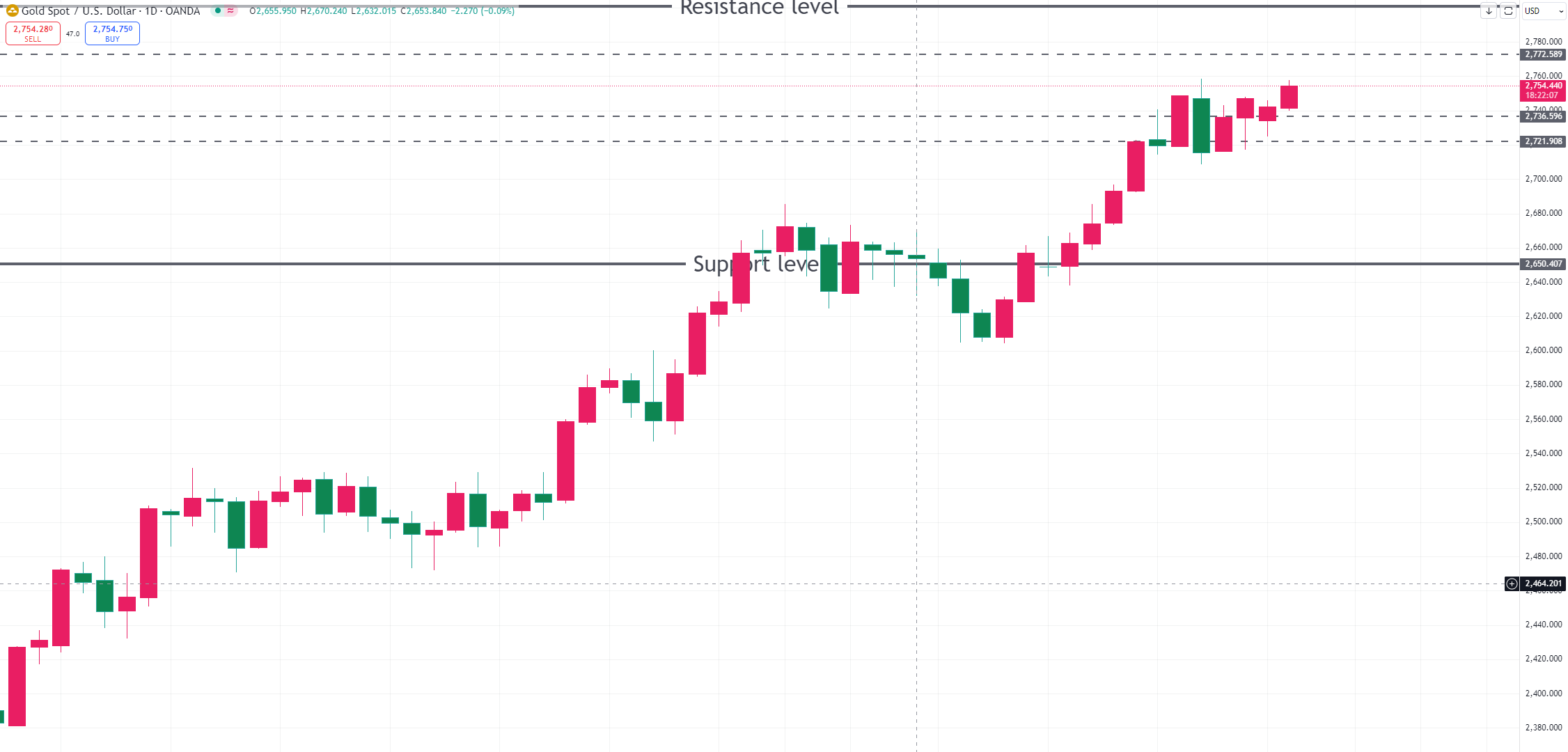
On the upside, the nearest resistance is located at today’s high $2,758.30. After breaking through the resistance level, it will face the challenge of a new contract high of $2,772.60. On the downside, first support is seen at today's low of $2,736.90 and then at last week's low of $2,722.10. These two levels will be key points for bears to overcome.


Trending Articles
- Who Is Andrew Tate and Why Is He Famous? 10 Things to Know the Controversial Influencer
Discover who is Andrew Tate and why he's making waves in the digital sphere. Uncover 10 intriguing facts about this controversial influencer, his journey, and his impact on the online world.
2024-03-01 TOPONE Markets Analyst - Andrew Tate Net Worth 2024: Is the Internet's Most Controversial Man Worth $800 Million?
Explore the enigmatic Andrew Tate's net worth and delve into the controversies surrounding the internet's most polarizing figure. Is he truly worth $800 million? Uncover the truth behind his wealth and reputation here.
2024-02-23 TOPONE Markets Analyst - 20 Strongest Currencies in the World in 2024
Want to know the strongest currencies in the world in 2024? Here are the list for you!
2024-01-30 TOPONE Markets Analyst - Falling Wedge Pattern: The Ultimate Guide
A falling wedge is a bullish pattern characterized by a wide top and shrinking bottom. It is an extremely bullish pattern in a trading market.
2023-09-25 TOPONE Markets Analyst

 Bonus!

Bonus rebate to help investors grow in the trading world!