English






The Fed's “Typhoon Harvest”: New Challenges to Global Capital Flows
Recently, the Federal Reserve's monetary policy operations have been like a "typhoon", causing waves in the global financial market. His hawkish statement not only sent the U.S. market on a roller coaster ride, but also triggered violent fluctuations in global funds, and 35 trillion funds may be quickly withdrawn. Is this series of actions aimed at controlling inflation, or is it concealing the U.S. debt crisis? This article will delve into this issue and analyze its impact on the global economy.

 11568
115681. Policy Background of the Federal Reserve
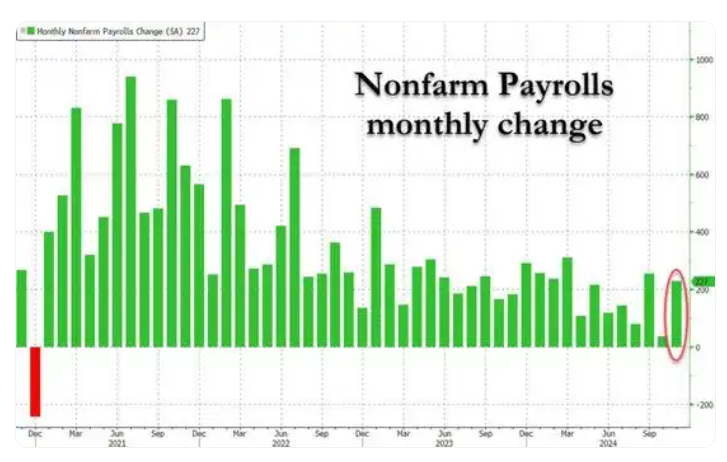
Looking back on December 7, 2024, the U.S. Department of Labor released the November non-farm employment report on that day. It shows that 227,000 new jobs were created. However, the unemployment rate climbed to 4.2%, which cast a shadow over this optimistic report.
The release of this data was like a bombshell dropped on the financial market, causing violent market fluctuations. Investors' expectations that the Federal Reserve will soon cut interest rates have increased sharply. There are even predictions that the possibility of a 25 basis point interest rate cut is as high as 90%.
However, just as the market held its breath in anticipation of an interest rate cut, the Federal Reserve unexpectedly poured cold water on it. Cleveland Fed President Harmack, Chicago Fed President Goolsby and other Fed heavyweights have spoken out one after another. Their remarks revealed a firm hawkish stance, suggesting that the pace of interest rate cuts should not be too rapid.
These sudden tough statements had an immediate impact on the market. The U.S. stock market fell in response; safe-haven assets such as gold and Bitcoin were not spared and suffered heavy losses.
However, the Federal Reserve did not do what the market wanted, and several heavyweight officials issued hawkish remarks one after another, suggesting that the pace of interest rate cuts should not be too fast. This "play hard to get" strategy caught the market off guard.
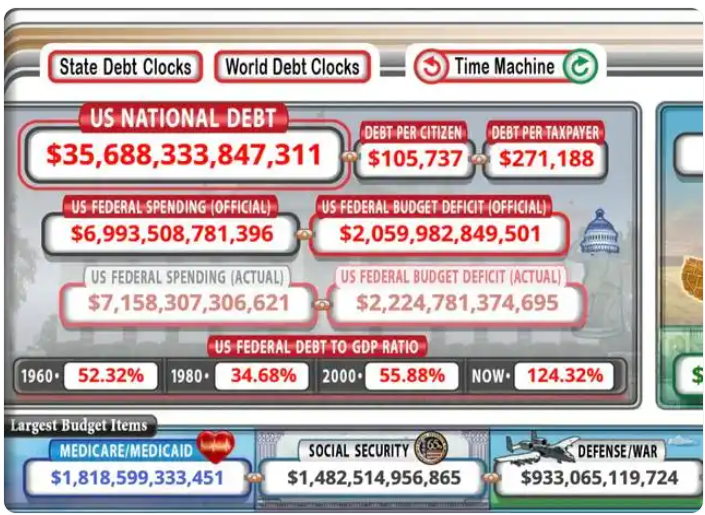
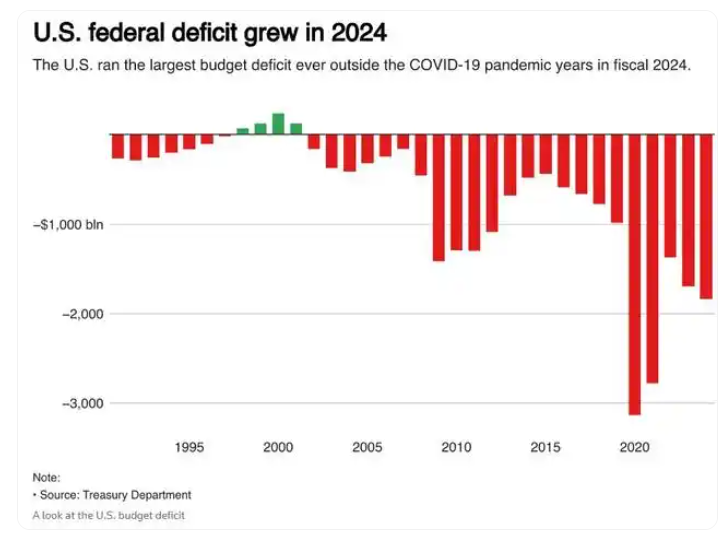
In fact, the logic behind it is not obscure. In fiscal year 2024, the U.S. government's budget deficit has exceeded the $1.8 trillion mark. The heavy debt burden is suffocating the country's financial system.
The Fed faces a tricky dual challenge: containing rising inflationary pressures while dealing with the cooling effect of higher interest rates on the economy. This dilemma not only makes the domestic economic prospects of the United States confusing, but also creates waves in the global market.
In order to deal with the pressure brought by inflation and high interest rates, the Federal Reserve has to adopt a "radical cure" approach to ease the pressure on the economy and financial markets by adjusting interest rate policies.
2. Market Reaction
The Fed's hawkish statement was like a "depth bomb", causing violent fluctuations in the market. The market's optimism was instantly extinguished, and investors began to re-examine the future policy path.
The prologue of the story was kicked off by the market's excessive optimism about interest rate cuts. In early December, the release of non-farm payrolls data brought a glimmer of hope: the increase in jobs seemed to indicate an economic recovery.
However, rising unemployment has provided the market with an excuse to cut interest rates. Data from the Chicago Mercantile Exchange shows that market expectations for an interest rate cut in December have sharply increased, and the probability has skyrocketed. Investors took action one after another, and voices of "buy, buy, buy" came and went in the stock market. A rate cut appears to be a foregone conclusion.
However, just when the market was full of expectations, the Fed unexpectedly "changed its tone." Several Fed officials have issued tough hawkish remarks one after another, making it clear that interest rates need to be cut with caution. These sudden statements did not appear on the financial calendar in advance and were like a well-planned "raid" that caught investors off guard.
Federal Reserve Chairman Powell was even more outspoken, pointing out that the economy showed no signs of an urgent need to cut interest rates, and that cutting interest rates too quickly could rekindle inflation. As soon as these remarks came out, the market's optimism was instantly doused by cold water.
From December 7 to December 18, the Fed's psychological tactics were in full swing. First came the successive statements from Federal Reserve officials, followed by the release of a series of economic data that the market paid close attention to. Including November's CPI, factory orders, and ISM service index, one after another, Powell's speech became the focus. Market sentiment is like a puppet being pulled, with stock and bond markets becoming more volatile.
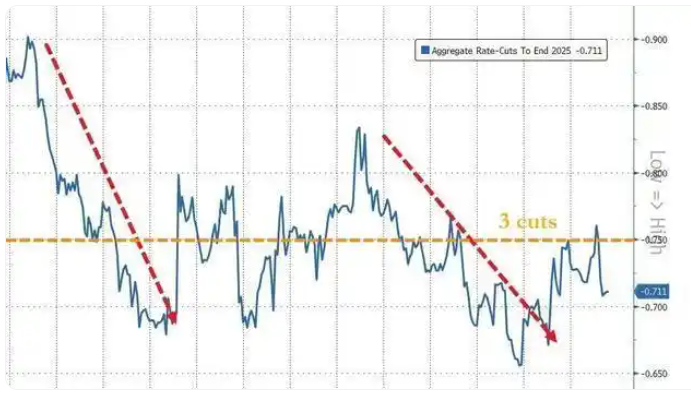
At the same time, the Federal Reserve's hawkish stance prompted investors to reassess future policy directions. There are predictions that the Federal Reserve may cut interest rates in December. But it may remain on hold at subsequent meetings, and may not even cut interest rates again until June or July next year, which is very different from what was expected three months ago. Markets are beginning to question whether the Fed's rate-cutting cycle is nearing its end.
3. Impact on the International Market
The Fed's policies not only affect the U.S. market, but also have a profound impact on the global economy. Especially for some countries with relatively fragile economic foundations, such as South Korea, India and South Africa. Capital outflows and exchange rate depreciation pressures have increased. Citibank warned that South Korea's financial markets may face greater pressure.
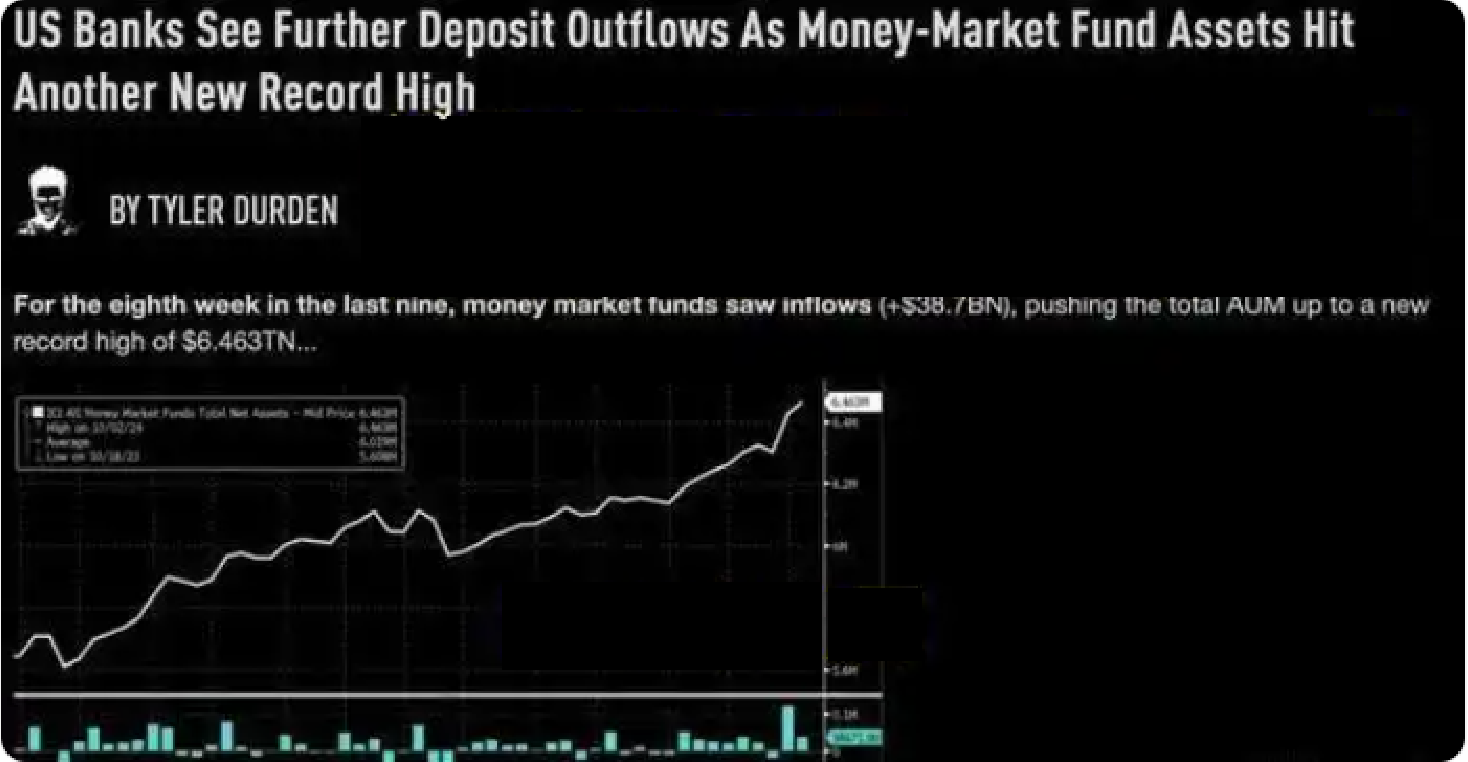
Foreign investors have sold $606.42 billion worth of U.S. stock funds since August, the largest monthly net disposals since December 2022. U.S. bank deposits may also further retreat, leading to increased market volatility.
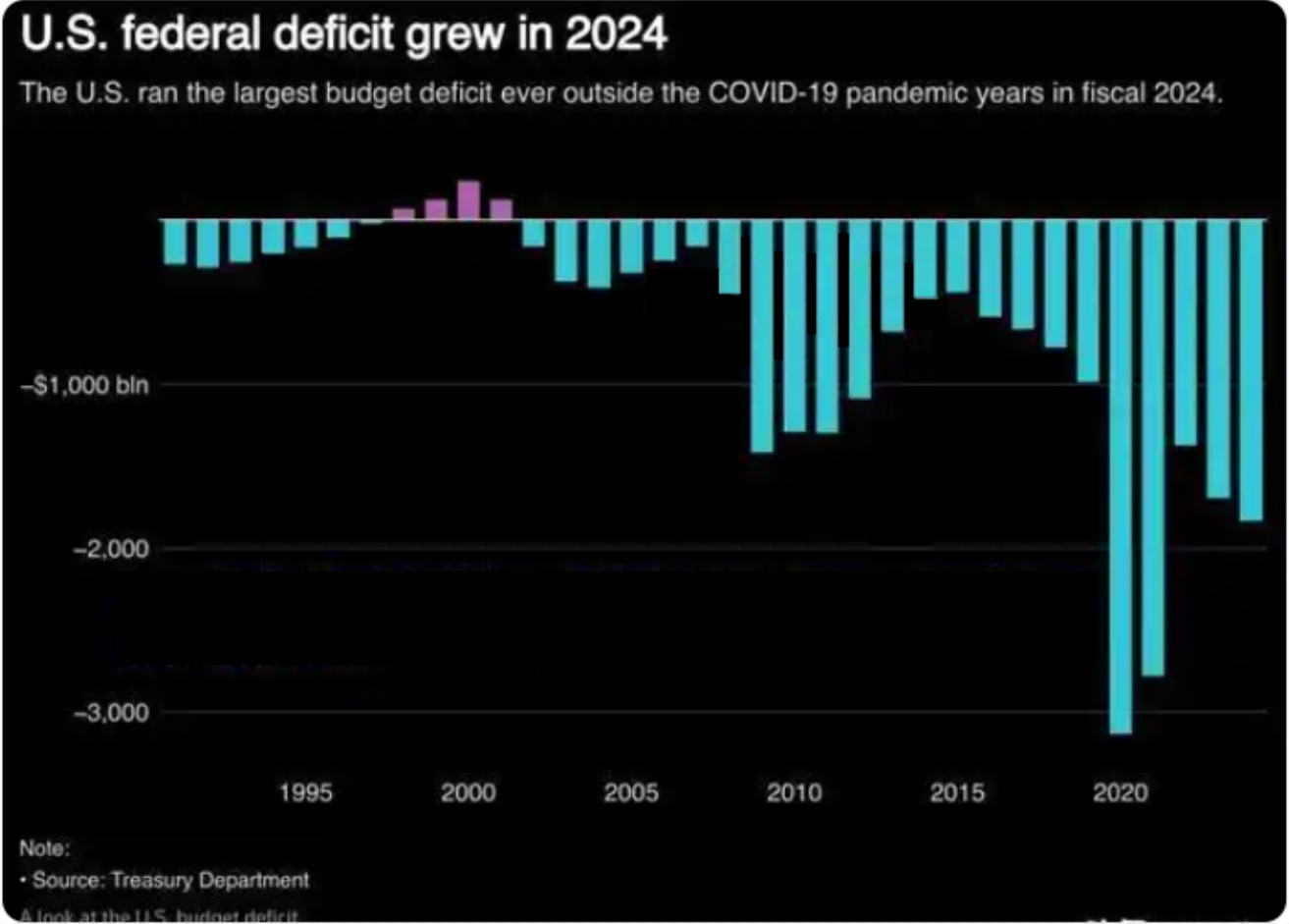
In this global economic game, the financial tensions in the United States have undoubtedly brought additional pressure to the Federal Reserve. In fiscal year 2024, the U.S. budget deficit has exceeded US$1.8 trillion, a surge of more than 8% compared to the previous year. What's even more striking is that the interest cost on Treasury bonds soared by 29%, reaching a staggering $1.133 trillion, a record high. This figure is not only shocking, but also reflects the seriousness of the US fiscal situation.
The Congressional Budget Office's forecast has sounded the alarm. It is expected that by 2034, the U.S. deficit will expand to 2.8 trillion U.S. dollars, and the debt-to-GDP ratio will surge to 122%. These figures not only indicate future fiscal uncertainty, but also hint at the huge challenges that the U.S. economy may face.
4. Views of Expert & Netizen
In this regard, experts and netizens launched a heated discussion. Some people believe that the Fed is playing a "Give And Take" game. Let the market feel hopeful first, and then pour cold water on it. There are also criticisms that the United States, despite its poor financial situation, is still playing this harvesting game and using the global economy as a cash machine.

One netizen pointedly pointed out that the Fed's hawkish stance is actually pouring cold water on Wall Street investors, but it is the ordinary people who are forced to foot the bill who are suffering. Of course, there are also those who argue from the perspective of the Fed and believe that this is the lesser of two evils. If they don't harvest now, they will make it worse when the debt crisis breaks out.
5. Our Analysis & Conclusion
Is this set of operations by the Federal Reserve to control inflation, or is it to cover up the debt crisis? Judging from the data, the high deficit and huge debt in the United States have put great pressure on the Treasury Department and the Federal Reserve. By adjusting interest rate policy, the Fed attempts to stabilize inflation while easing debt pressure.
However, the impact of this "typhoon-like harvest" on the global economy cannot be underestimated. Emerging market countries face the challenges of capital outflows and economic instability, and global markets need to be prepared to respond.
In the context of globalization, the economies of various countries are closely connected. The Fed's policy adjustments will inevitably trigger a chain reaction. For investors, staying vigilant and responding rationally is the key. In the face of new challenges in global capital flows, who can escape unscathed and who will become the biggest loser is worth pondering.
Therefore, the Federal Reserve's policy decisions are not only an internal matter of the United States, but their influence has transcended national borders and become an important variable in the global economy. In the new era of globalization, understanding and responding to such policy changes will be a required course for every country and investor.


Trending Articles
- Who Is Andrew Tate and Why Is He Famous? 10 Things to Know the Controversial Influencer
Discover who is Andrew Tate and why he's making waves in the digital sphere. Uncover 10 intriguing facts about this controversial influencer, his journey, and his impact on the online world.
2024-03-01 TOPONE Markets Analyst - Andrew Tate Net Worth 2024: Is the Internet's Most Controversial Man Worth $800 Million?
Explore the enigmatic Andrew Tate's net worth and delve into the controversies surrounding the internet's most polarizing figure. Is he truly worth $800 million? Uncover the truth behind his wealth and reputation here.
2024-02-23 TOPONE Markets Analyst - 20 Strongest Currencies in the World in 2024
Want to know the strongest currencies in the world in 2024? Here are the list for you!
2024-01-30 TOPONE Markets Analyst - Falling Wedge Pattern: The Ultimate Guide
A falling wedge is a bullish pattern characterized by a wide top and shrinking bottom. It is an extremely bullish pattern in a trading market.
2023-09-25 TOPONE Markets Analyst

 Bonus!

Bonus rebate to help investors grow in the trading world!