English





Commodities Trading: The Ultimate Guide
Traders purchase and sell commodities on certain exchanges to profit from changes in the commodity market. This guide can read more about the advantages and dangers of commodity trading.

 2274
2274
Commodities can be an effective tool for investors to diversify their portfolios outside of traditional equities. When markets are turbulent, some investors also turn to commodities because the prices of commodities frequently move counter to those of stocks.
There are the raw elements that drive the world economy. Crude oil, Iron ore, and precious metals are a few examples of commodities trading. Smart investors can benefit from their constantly fluctuating prices, but commodities investing needs specialized expertise and may be riskier than investing in more traditional assets like equities and bonds.
Raw materials like grain, bread, oil, and metals are considered commodity products. The purchasing and selling of these basic resources are known as commodities trading. It occasionally involves the exchange of real things. However, futures contracts, where you agree to purchase or sell a commodity at a specific price at a particular date, are where it typically occurs.
Your portfolio can become more diversified by adding commodities, which also act as an inflation hedge. Commodities, however, are very erratic. Trading commodities is complicated because unpredictable variables like weather and political unrest can significantly impact pricing. Continue reading to discover several different strategies to invest in commodities and the fundamentals of how commodities trading operates.
The majority of Americans' daily lives include commodities to a large extent. A commodity is a fundamental good that is traded and can be converted into other products of the same kind. Classic examples of commodities are grains, gold, pork, oil, and natural gas.
Commodities can be a helpful tool for investors trying to diversify their portfolios away from traditional equities. Due to the fact that commodity prices frequently fluctuate opposite to stock values, some investors also flock to commodities during times of market instability.
Commodity trading used to be primarily the purview of professional traders and required a sizable investment of time, money, and expertise.
Today, there are more options for trading commodities.
What Are Commodities?
A commodity is a basic good that is used in trade and can be exchanged for other items of the same kind. The majority of the time, commodities trading are utilised as raw materials to create other products or services. Therefore, a commodity is typically a raw resource utilised to create completed goods. Contrarily, a product is the finished good that is offered for sale to customers.
A commodity's quality may slightly vary amongst producers, but it is generally the same. Commodities, usually called base grades, must also satisfy specific minimum requirements to be traded on an exchange.
Commodities, such as agricultural goods, mineral ores, and fossil fuels, are raw materials that are utilized to make completed products. Contrary to securities like stocks and bonds, which only exist as financial contracts, commodities are tangible objects that are bought, sold, and traded on financial markets.
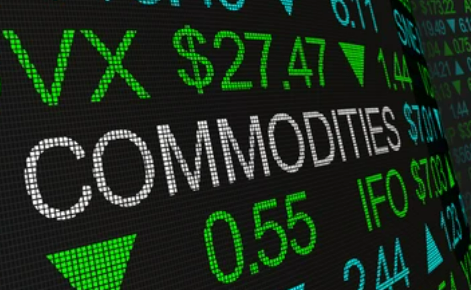
Commodity prices continually fluctuate due to shifting supply and demand patterns across the global economy. While rising Middle Eastern oil production could lower the price of oil globally, a war in Ukraine could result in higher grain prices.
Investors in the commodities market seek to profit from movements in supply and demand or lower risk by diversifying their portfolios across several asset classes.
The primary materials used to create items are known as commodities. They could also be everyday necessities like certain agricultural goods. A commodity's crucial characteristic is that there is very little, if any, difference between it when it comes from one producer and the same producer when it comes from another. Regardless of the producer, an oil barrel is essentially the same product.
Types of Commodities
Commodities are divided into two groups by investors: hard and soft. Hard commodities must be discovered through mining or drilling. Grown or cultivated soft goods include cattle. The four primary sorts of commodities are as follows.
There are four main types of commodities:
Energy
The market for energy includes uranium, oil, natural gas, coal, and ethanol. The renewable energy resources solar and wind are also included in the term "energy." Investors interested in the commodities market in the energy sector should also be aware of the economic downturns. New technological developments in alternative energy sources (wind power, solar power, biofuel, etc.) that aim to displace crude oil as the principal source of energy, as well as any output changes dictated by OPEC, can all have a significant impact on the market prices for commodities in the energy sector.
Metals
Commodity metals include industrial metals like iron ore, tin, copper, aluminum, and zinc, as well as precious metals like silver, palladium, and platinum. Metals commodities include platinum, copper, gold, and silver. Because gold is a dependable metal with real, transferrable value during times of market turbulence or bear markets, some investors may opt to invest in precious metals. Investing in precious metals can also act as a hedge against times of high inflation or currency depreciation.
Examples of energy commodities are crude oil, heating oil, natural gas, and gasoline. Changes in the global economy and a decline in oil production from older wells have historically increased oil prices. It is because demand for energy-related goods has increased at the same time that oil supplies have decreased.
Agricultural products
Cotton, palm oil, and rubber are examples of non-edible items that fall under the category of agriculture. Agricultural commodities also include corn, soybeans, wheat, rice, chocolate, coffee, cotton, and sugar. In the agriculture sector, grains can be extremely volatile during the summer and other seasons of weather shift. Population expansion and the restricted availability of agricultural products can present opportunities for investors who are interested in the agricultural industry to profit from growing agricultural commodity prices.
Livestock and Meat
Direct investment in commodity futures contracts can be quite dangerous due to market volatility, especially for novice investors. A trade going against you could result in you losing your initial deposit (and more) before you have a chance to exit your position; it is a disadvantage of the tremendous profit potential.
The purchase of options is permitted in the majority of futures contracts.
Futures options are a less dangerous approach to entering the futures markets.
One way to consider purchasing options is to pay a deposit rather than the full amount up front.
If a contract includes an option, you are given a choice but not the obligation to carry it through.
As a result, you have capped your loss at the cost of the option you purchased if the futures contract price doesn't move in the direction you expected.
What Is Commodity Trading?
You probably don't think much about where something was produced or ground when you purchase a sack of wheat flour or a kernel of corn at the grocery store. It is because corn and flour are both necessities. Bulk purchases and sales of these interchangeable resources are referred to as commodities trading. These basic materials are frequently the foundational components of produced goods.
Commodity traders wager on the direction of the commodity's price movement. If you anticipate increasing a commodity's price, you should buy futures or go long. You short futures or sell them if you believe the price will fall.
Buying and selling the actual commodity is one way to trade it, but futures contracts are far more popular. These contracts outline the conditions for asset delivery on a given future date. They are frequently employed as a risk management strategy by manufacturers or significant industrial users in the event that prices rise or fall.
Consider a farmer who grows corn as an example. You need to be certain that you can sell your harvest for at least the going rate in the market. In order to sell 5,000 bushels of corn at a price of $4 apiece in 90 days, you sell a futures contract. Since you've committed to $4 per bushel, you benefit if prices fall. But if prices increase to $5, you lose out on the profits.
Consider being a food processing business that requires corn to make cornmeal for food stores. If the crop is smaller, you don't want to take the chance of higher prices. Consequently, you spend $4 on that futures contract for 5,000 bushels of maize. In the event that prices decline, you lose money because you overpaid. However, even if they soar, you're still only paying $4 per bushel.
You can make predictions about corn price movements as an investment. Consider the scenario where you purchase the same futures contract. You don't actually plan to purchase 5,000 bushels of corn in the next 90 days, but You're placing a wager that the cost will rise and you'll be able to sell it for more money. If you think prices will decline, you might also go short.

On commodity exchanges, futures contracts are typically traded. The two most well-known exchanges in the United States are the Chicago Mercantile Exchange and the New York Mercantile Exchange.
How to Trade Commodities?
There are other ways to invest in commodities outside commodity trading. Here are the first four methods.
Direct investment in the commodity
Physically purchasing a commodity is the most straightforward approach to investing in commodities. The fact that you can avoid using an intermediary is one benefit. Typically, finding a dealer to sell you a specific good may be done with a quick internet search. The dealer will frequently repurchase it from you when you no longer want it. However, logistics for delivery and storage must be considered.
It might be fairly easy if you're purchasing gold. Online, it's simple to locate a coin trader who will sell you a bar or coin. You are free to store it and sell it whenever you choose safely.
However, it becomes much more challenging when attempting to plan the delivery and storage of livestock, crude oil, or agricultural products like bushels of corn. Because of this, investment in the majority of physical commodities is often prohibitively time-consuming for individual investors.
Purchase futures contracts.
If you have a brokerage account that permits it, you can trade commodities derivatives like futures contracts. However, rather than being created for individuals, futures contracts are typically made for huge organizations that deal in commodities.
You must have a specific amount of capital, referred to as margin, in your brokerage account in order to trade futures. One risk is that margin requirement for trading commodities are sometimes lower than for stocks.
Margin trading involves using borrowed funds, which can increase your losses. Given the erratic nature of commodity prices, it's crucial to be prepared for potential margin calls in which your broker requests a larger deposit.
Invest in stocks of commodities.
Purchasing stock in the firms that generate commodities is another option to invest in them. For instance, you could invest in beef, metal, or energy equities.
A company that manufactures a good or service won't always advance or deteriorate along with that good or service. Undoubtedly, an oil production business will profit from rising crude oil prices and suffer from falling ones. However, the quantity of oil in its reserves and whether it has lucrative supply agreements with customers in high demand are significantly more significant.
Invest in mutual funds and commodity ETFs.
For people who don't want to purchase the commodity directly, commodity exchange-traded funds (ETFs) and mutual funds provide exposure to commodities. There are investment funds available that invest in tangible assets, commodities stocks, futures contracts, or a combination of these.
However, the price of the underlying good may not move in tandem with the movement of commodities funds. New investors might be surprised by that.
Commodities Trading Market vs. Stock Market
Commodity vs. Stock Trading
Leverage is used far more frequently in commodity trading than in stock trading. It indicates that you only contribute a portion of the investment's required capital. For an oil futures contract, you might put down 10%, or $7,500, instead of the whole $75,000 required.
Based on the anticipated value of the deal, the contract will require you to maintain a minimum balance. You would be subject to a margin call and have to make more deposits in order to return to the trade's necessary minimum value if the market price started moving in a direction where you were more likely to lose money.
Due to the use of leverage, trading on margin can produce higher profits than the stock market, but it can also produce higher losses, according to Turner. The commodity market has a high-profit potential, but it also has a significant potential for loss because little price movements can result in large changes in your investment return.
Additionally, commodities are typically short-term investments, particularly if you engage in a futures contract with a deadline. In contrast, buying and retaining assets for a long time is more typical with stocks and other market assets.
Additionally, since markets are open almost constantly, you have more incredible time to conduct commodity trades. When the stock exchanges are open and open for business, this is when you typically trade equities. Although premarket futures may give you some early access, the majority of stock trading takes place during regular business hours.
Overall, commodity trading is more speculative and high-risk than stock trading, but it can also result in quicker and more significant rewards if your positions are successful.
Because of shifts in supply and demand, commodity prices frequently experience extreme fluctuations. For instance, prices typically decrease when a given crop has a large yield. Prices frequently increase during droughts as a result of worries that the supply would decline.
Similar to this, demand for natural gas for heating increases during cold weather. Prices rise as a result of this. But a warm period throughout the winter can cause prices to drop.
Even so, some commodities, like gold, which central banks use as reserve assets, are comparatively stable. But generally speaking, commodities are much more erratic than stocks or bonds.
Commodities are a source of diversification for certain investors. With respect to equities, commodities typically have a low or negative correlation, meaning that their prices don't move in lockstep with one another.
For instance, there is typically a negative correlation between oil and stocks. Therefore, a weaker stock market has historically been associated with increased oil prices. Similarly, the stock market frequently performs well when oil prices are low.
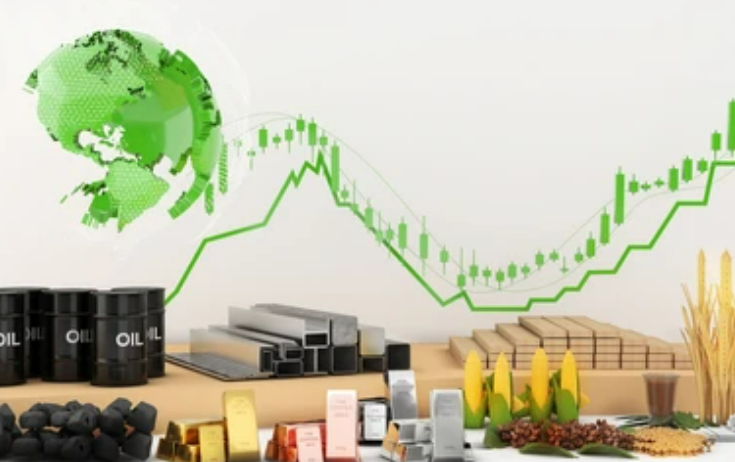
Because of this, commodities are a well-liked stock market hedge. For instance, during a bad market, many investors turn to gold. A common inflation hedge is commodities. Commodity prices frequently rise in response to high inflation; when inflation is reduced, equities and bonds perform better.
There are several ways you might trade commodities in your portfolio, including each with its benefits and drawbacks.
Commodities Futures
Purchasing and selling contracts on a futures exchange are the most common way to trade goods. To make this work, you get into a contract with another investor based on the projected future increase in the price of a commodity.
Consider signing a commodities futures contract to purchase 10,000 barrels of oil at a price of $45 per barrel within 30 days. You don't transfer the tangible items at the end of the contract; instead, you end it by taking an opposing position on the spot trading market. Therefore, in this case, By signing another contract to sell 10,000 barrels of oil at the going rate, you would close out the position before the futures contract's expiration date.
You would make money if the spot price exceeded the $45 per barrel stipulated in the contract; otherwise, you would lose money. However, if you had sold oil via a futures contract, you would profit when the spot price decreased and lose money when the spot price increased. You may terminate your job any time before the contract's expiration date.
You must open an account with a specialty brokerage that accepts these types of trades in order to invest in futures trading.
Craig Turner, the senior commodities broker with Daniels Trading in Chicago, explains that traders can access these markets by opening an account with a brokerage house that deals in futures and options. Each time you initiate or end a position in commodity futures trading, you will be required to pay a commission.
Physical Commodity Purchases
You are not actually purchasing or selling the physical commodity when you trade futures contracts. Futures trading consist solely of speculating on price movements; Millions of oil barrels and herds of live livestock are not actually received by traders. Individual investors can and do take ownership of tangible items, such as gold bars, coins, or jewelry, for precious metals like gold and silver.
With these investments, you can experience the weight of your investments and have exposure to commodities like gold, silver, and other precious metals. However, compared to other investments, precious metals have higher transaction expenses.
"This approach is only workable for high-value commodities, such as gold, silver, or platinum. Even then, huge markups over spot pricing on the retail market would be paid by investors, according to Giannotto.
Commodities Stocks
Purchase of a company's stock that deals with a commodity is an additional choice. In the case of oil, you may invest in the shares of a firm that refines or drills for oil; in the case of grain, you could invest in a sizable agricultural company or one that sells seeds.
These stock investments move in lockstep with the value of the underlying asset. Oil companies should be more profitable as a result of rising oil prices, which would increase the value of their stock.
Since you aren't merely wagering on the commodity's price, investing in commodity stocks has a lower risk than investing directly in commodities. Even if the value of the item itself declines, a well-managed corporation could still turn a profit. However, this has two sides. Additional elements, such as the firm management and overall market share, might affect an oil company's stock price in addition to increasing oil prices. Purchasing stocks is not an exact fit if you're searching for an investment that closely matches the price of a commodity.
Commodities ETFs, Mutual Funds and ETNs
Additionally, there are commodity-based mutual funds, exchange-traded funds (ETFs), and exchange-traded notes (ETNs). These funds pool the capital of numerous small investors to create a sizable portfolio that makes an effort to track the price of a single commodity or a basket of commodities. An example of one of these funds is an energy mutual fund that invests in a variety of energy commodities. The fund may invest in the equity of various businesses having exposure to commodities or purchase futures contracts to monitor the price.
Giannotto claims that because commodity ETFs are affordable, accessible, and extremely liquid, they have effectively "democratized" commodities trading for all investors.
Compared to trying to create your portfolio, you can access a considerably more comprehensive choice of commodities with minimal investment. Additionally, a qualified investor will be in charge of managing the portfolio. However, the commodity fund will charge you a higher management fee than if you had handled the investments yourself. Additionally, the fund's strategy may prevent it from precisely tracking the commodity's price.
Commodity Pools and Managed Futures
Private funds that can invest in commodities include managed futures and commodity pools. They are similar to mutual funds, but many of them aren't traded publicly, so you have to get permission to invest in the fund.
These funds have the potential for better returns since they have access to more sophisticated trading strategies than ETFs and mutual funds do. The management expenses could also increase in exchange.
Benefits and Risks of Commodities Trading
Trading in commodities has a lot of benefits. Let's examine those in greater detail using examples.
Benefits of Trading in Commodity Exchanges
Potential Returns
Individual commodity prices are influenced by a number of factors, including supply and demand, inflation, and the state of the economy. The need for large-scale international infrastructure projects that affect commodity prices has increased as a result of these projects. Commodity prices are impacted by a rise in a company's stock price.
Potential Hedge Against Inflation
Commodity prices might rise as a result of inflation. Commodities do well when high inflation but are more volatile than other investment types.
Diversified Investment Portfolio
An optimal asset allocation strategy is referred to as a diversified investment portfolio. Commodities aid the diversification of the investment portfolio. If someone wishes to buy stocks and bonds, they should invest in raw commodities.
Transparency in the Process
Commodity futures trading is a transparent method that enables fair pricing that is managed by widespread involvement. It displays the various viewpoints of numerous individuals that deal with the commodity.
Profitable Returns
If there is a large level of liquidity, commodities as investments become riskier. It implies that businesses may suffer both significant profits and significant losses.
Cushioning against market fluctuations
Purchasing power is needed in the event that the rupee loses value. Investors sell their stocks and bonds during times of inflation in order to purchase commodities. Price increases for basic products result from this. Only commodities that serve as a buffer against market risks can be profitable.
Trading on Lower Margin
A margin deposit with the broker might range from 5 to 10% of the overall contract value. Compared to other asset types, this is lower. Individuals can invest and take larger positions with lower cash because of low margins.
Risks of Commodities Trading
Platforms for managing risk in commodity trading can thoroughly analyze potential exposures and their effects. It can aid businesses in having excellent control over both their operational and financial performance. The top 7 commodity risks that you need to manage and control to ensure optimal business growth are listed below.
Operational Risks
One of the main causes of significant financial downturns in commodity trading businesses worldwide is poor management of operational risks. Trading in commodities entails a variety of operational hazards, such as systematic failures, data entry, and accounting errors. Operational hazards draw attention to the exposures and uncertainties businesses encounter when conducting regular company operations.
Internal process or system interruptions are the cause of operational risks. Poor trade management systems can also cause operational hazards. These dangers frequently depend on how an organization operates and handles daily tasks. Operational hazards could include any exposures related to system and equipment maintenance.
Counterparty Risks
A trading contract between two parties has the risk that the other side won't uphold the financial commitments. This danger, known as counterparty risk, is present in all financial agreements and transactions. Every time a party to an agreement breaches the terms of the agreement, the risk is introduced.
Counterparty risk is common in the trading markets and is felt by both large and small dealers. Protecting your organization from counterparty risks requires a structured approach that includes appropriate counterparty selection, documentation, and other risk management techniques. Inappropriate counterparty selection may result in costly exposure events that cause big losses for your organization.
Credit Risks
The chance of sustaining a loss as a result of the credit risk of one party's inability to uphold the terms of a financial transaction. It is also possible to think of this risk in terms of the possibility that the lender won't get paid by a party with whom it has a contract. Thus, the word "credit risk" refers to the risk of not being paid for providing commodities to a counterparty.
The worsening financial state of the counterparty is typically what causes credit risk. It may cause the lending party's cash flows to become erratic, ultimately having an adverse financial impact. As a result, it's critical to constantly have a solid system to manage financial risk to ease worries about credit risks when trading commodities.
Liquidity Risks
The inability of a commodity to be bought or sold quickly enough to prevent or minimize a loss is referred to as liquidity risk. Liquidity risk develops when a commodity trading corporation is unable to meet its short-term credit obligations. Market/asset liquidity risk and funding/cash flow liquidity risk are the two distinct types of liquidity risk.
The risk that a commodity trading company wouldn't be able to fulfill its overdue obligations is known as funding or cash flow liquidity risk. The risk associated with market liquidity is the potential of not being able to sell a commodity. It can be the case that no one wants to purchase the commodity the trading company is supplying.
Compliance Risks
Businesses engaged in commodity trading must adhere to these activities' laws and norms. The commodity trading industry could face severe penalties or financial losses if this isn't done. Compliance risks are the dangers brought on by these shortcomings. Compliance risks are those that could result in legal or regulatory repercussions and reputational harm.
When a commodity trading company disregards the relevant laws and regulations pertaining to commodity trading, it may be subject to compliance concerns. It is crucial to take a focused approach to reduce the likelihood of these legal infractions. Strict risk management procedures for commodity trading can also ensure that all your trading activities are legal. It can help you protect yourself from costly compliance risks.
Market Risks
Market risks for commodities trading are those that could result in losses as a result of unfavorable price fluctuations. This kind of risk, which affects the entire market, is caused by changes in commodity prices. Market risks, also called systemic hazards, cannot entirely be avoided due to their unpredictable nature.
The likelihood of risk exposures is typically long-term when it comes to market risks, as opposed to other risks. Regardless of their commodity or company size, all types of commodity dealers may be subject to commodity risks. Because of this, companies engaged in commodity trading must have efficient risk management strategies to shield their firm from market hazards.
IT Risks
IT hazards include faulty hardware, software, and hostile assaults that could stop your business operations in their tracks. Your information could be vulnerable to serious data losses due to various security risks. Business-critical aspects like security, availability, and performance are all included in the scope of IT risks.
IT risks can drastically lower your company's value by compromising data, decreasing productivity, and other issues. You must clearly understand your IT risk picture to guarantee that your trading operations run well. As a result, your organization needs a strong risk management strategy in place to guard against common IT hazards.
Should You Invest in Commodities?
Trading commodities is a high-risk, high-reward activity. It may be a good way to protect your wealth against inflation or a bear market.
However, you should only take it into consideration if you are well-versed in the dynamics of supply and demand in the commodity market. It includes being aware of current events and previous price trends. You can lower your risk by minimizing your use of margin when you first start.
Commodity trading sometimes resembles speculating more than investing. Unpredictable elements like weather, illness, and natural disasters can have a significant short-term impact on commodity prices. Most people would be better served by commodity equities, mutual funds, or exchange-traded funds (ETFs) if they wanted to invest in a commodity for the long term.
The ideal option for sophisticated investors is commodity investing. Before engaging in any trading, you must thoroughly comprehend the commodity price charts and other types of research. You also need to have a high-risk tolerance, which means you can tolerate short-term losses in the quest for long-term gains because market price movements can result in significant gains and losses. And if you do invest in commodities, only a small fraction of your overall portfolio should be made up of them.
"Many utilize roughly 20% or less of their portfolio for higher risk/reward for investors and dealers attempting to diversify their holdings in an asset class that offers a higher risk/reward profile," adds Turner. Commodity trade takes place in such areas.
As with any decision, think about consulting a financial advisor to see whether investing in commodities is a good fit for you and get advice on the best approaches.
Commodities Trading: Final Thoughts
Trading different commodities from the primary economic sector, which serve as the raw materials for production, is a foundational element of the world trade system. These are standardized raw materials that can be used in place of other products.
Investors can benefit significantly from learning commodity trading secrets, including high leverage levels and the chance to ride long-lasting bull or market trends. Commodity trading, however, is not a charity that gives away suitcases of cash to everybody who asks for some. Becoming a highly skilled and prosperous commodity trader needs dedication and practice, just like in any other investing area. One of the biggest problems is learning to use the leverage provided while avoiding taking on too high risks and potentially disastrous losses since many people who try their hand at the commodity trading game lose, that is, in all honesty, their tragic story.
However, that is not necessarily the case. There's no reason why you can't reap the benefits of highly profitable investments, all earned with the use of a minimal amount of trading capital if you enter the business of commodity trading with the appropriate caution and recognize that you need to learn how to successfully navigate a completely different trading arena than that of stocks, forex, or other investments. As you trade, keep these commodity trading secrets in mind; who knows, you might discover some of your own.


Trending Articles

 Bonus!
Bonus rebate to help investors grow in the trading world!