English






Top 10 Weakest Currencies in The World in 2024
The article focuses on the top 10 weakest currencies in the world in 2024 and explores the factors contributing to their low values.

 17223
17223




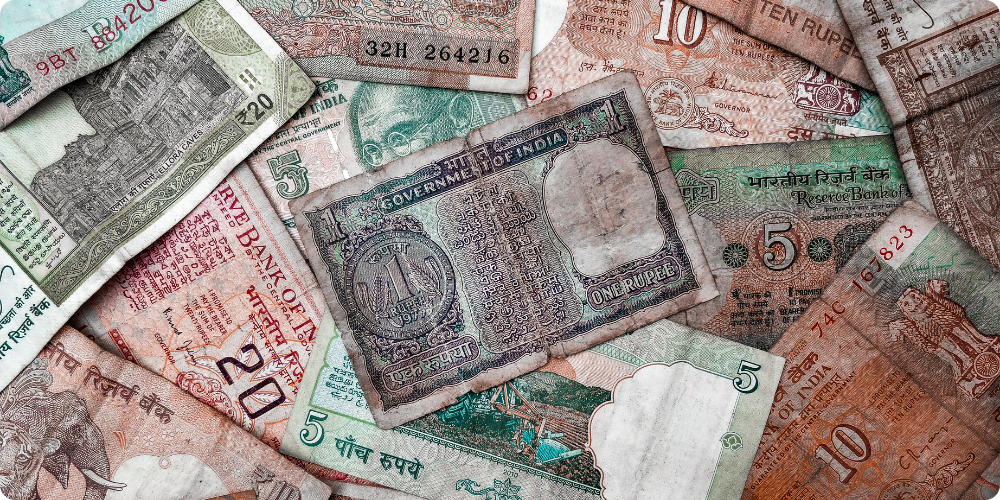
Most people are aware of the world's strongest, most stable, and most powerful currencies. But what about the world's least valuable currencies? Who knows what their names are and where they are issued?
The US dollar is a worldwide currency powerhouse: it is by far the most traded currency on the global arena and is frequently used as a benchmark for comparing currencies.
The dollar isn't the world's strongest currency—that honor belongs to Kuwait's dinar—but it's towards the top of the list of the 180 or so traditional fiat currencies recognized as legal tender around the world. A fiat currency is money that is not backed by a physical commodity such as gold or silver.
The world's least valuable currencies, which trade at fractions of a dollar, are at the other extreme of the spectrum. Often, tens of thousands of foreign currency units are required to obtain a single dollar. We've determined the world's top 10 weakest currencies based on their relative worth to the US dollar.
What Is a Foreign Currency?
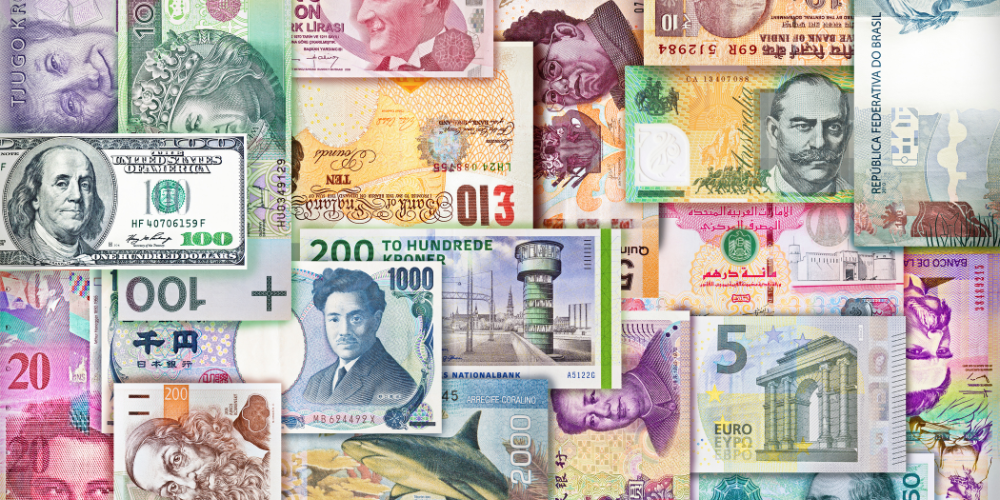
Foreign exchange, or forex, is the conversion of one country's currency into another. It is the recognized form of monetary exchange utilized by a foreign country. This is the sole money that the applicable government allows to be used for buying and selling within its boundaries.
In a free economy, a country's currency is valued according to the laws of supply and demand. In other words, a currency's value can be pegged to another country's currency, such as the U.S. dollar, or even to a basket of currencies. A country's currency value may also be set by the country's government.
However, many countries float their currencies freely against those of other countries, which keeps them in constant fluctuation.
How Is Foreign Currency Priced?
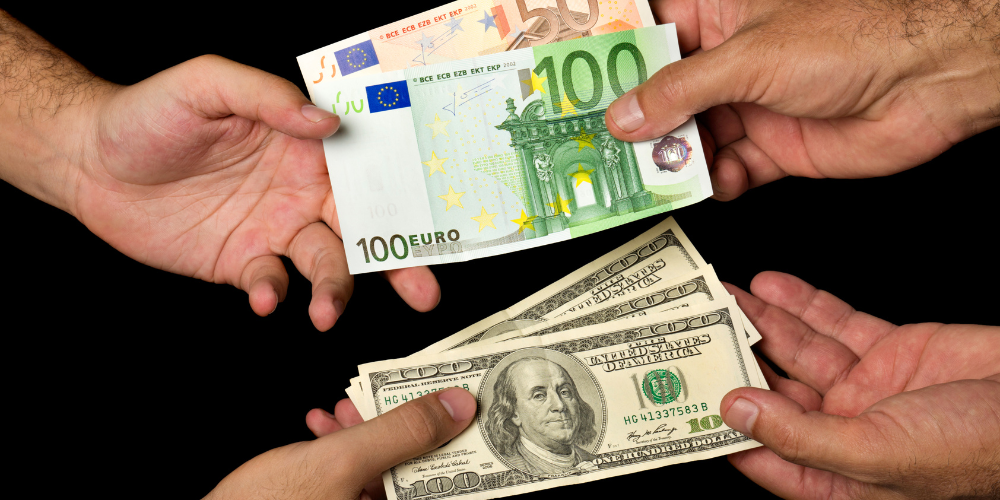
Currency pairings are used to exchange the world's currencies. So, for example, you swap—or, more precisely, buy—US dollars for Mexican pesos. This trade assigns a value to one currency in relation to another, and that value is known as the exchange rate.
The majority of currencies are "floating," which means their value fluctuates in reaction to supply and demand. However, certain currencies are "pegged," which means that their value relative to another currency, such as the dollar, remains constant at an agreed-upon rate.
Exchange rates influence the cost of products and services across countries.
When the dollar appreciates against the rupee, for example, American visitors to India may acquire more rupees for their dollars, resulting in cheaper holidays to see Mumbai or the Taj Mahal. However, it becomes more expensive for Indians to visit the United States since the rupee buys fewer dollars at a foreign currency exchange.
What Are The Factors That Affect Currency Exchange Rates?

The foreign exchange rate is a key indicator of a country's economic health. It sheds light on the country's economic future.
The exchange rate determines the value of a country's currency. The rate does not remain constant. It is always altering. In actuality, it fluctuates on a regular basis based on market conditions.
To offer you with further information, a few major economic variables that impact the foreign exchange market are listed below.
Rates of Interest
A shift in interest rates might be an influence. It may have an impact on the currency's value and the exchange rate. Many economic factors are interwoven, such as interest rates and currency exchange rates. If interest rates rise, lenders will anticipate higher interest rates. The result is self-evident. It would encourage greater international investment. As more overseas capital enters the market, exchange rates will rise.
Rates of Inflation
Currency exchange rates can be affected by changes in market inflation. If your country's inflation rate is low, your currency will have a higher value. When inflation is modest, the prices of goods and services grow slowly and gradually. When the rate of inflation continues to fall, the value of the currency rises. As the inflation rate rises, the value of the currency falls. It will also have an impact on interest levels.
Government debt is also known as public debt
Government debt is sometimes referred to as public debt. You're probably wondering why. The government's debt is a public liability. It has been confiscated by the government. If your country is in debt, the odds of receiving further funds are minimal. It has the risk of causing inflation. Foreign investors would be unwilling to invest in the currency if inflation was high. As a result, the currency's value would fall.
Political stability and sound fiscal policies are essential
Political stability is critical, and it cannot be stressed. The economic outcomes of a country have an impact on the FX market. Economic performance suffers when there is no stable governance. The currency would be unprofitable for investors. A stable administration will attract international investment. The investment will not only increase foreign capital, but it will also increase the value of the home currency. International investors are more inclined to put their faith in a country that has a stable political system and strong fiscal management.
A country's current account
A country's current account represents the country's financial position. It indicates the amount of money made on the currency market. It will include all important information, such as transaction volume, debts, and any other economic data. Foreign investors are less inclined to consider investing in a country's currency while its current account is in deficit.
Recession
The economic growth of a country is affected by recession. The currency market is no exception. Interest rates will fall in the case of a recession. As a result, foreign capital would devalue. When interest rates are low and foreign money is limited, the value of the currency falls. As a result, the exchange rate would fall.
What is The Weakest Currency in The World in 2023?
10. Ugandan Shilling (USH)-[1 USD = 3,507.71 UGX]
The Ugandan shilling, which has barely minimally increased in value over the previous two years, is the final member of our list of the world's lowest currencies. Apart from that minor gain, the Ugandan shilling has been extremely steady, suggesting that its value may gradually climb over the next several years.
9: Cambodian Riel (KHR)-[1 USD = 4,065.5 KHR]
While the Cambodian riel is a relatively unpopular currency, its status has been stable since 2020. This might be because the US dollar remains the favored currency in Cambodia for the great bulk of transactions, thereby keeping the riel's value low.
8. Paraguayan Guarani (PYG)-[1 USD = 7,089.86 PYG]
The status and stability of the Paraguayan guarani have generally remained unchanged, which is unfortunate because the country was making progress before being confronted with the COVID-19 pandemic's hurdles. This has rendered any increases mostly minor, and the guarani may remain among the world's top 10 weakest currencies for the foreseeable future.
7. Guinean Franc (GNF)-[1 USD = 9,002.5 GNF]
The Guinean franc has risen slightly during the last two years, but it remains one of the world's weakest currencies. There is confidence that Guinea's enormous natural resources will allow it to continue making great development in the future, especially if additional progress on the path to political stability and preventing repeating Ebola epidemics can be made.
6. Uzbekistani Som (UZS)-[1 USD = 10,812.5 UZS]
Although the Uzbekistani som has risen on our list of the world's lowest currencies, its value has actually fallen since 2020. The som has been struggling since the Uzbeki government depreciated its official currency by nearly half in 2018, in an effort to increase the country's attractiveness to investors.
Unfortunately, despite its stability, the som has failed to make any headway in regaining its prior values.
5: Sierra Leonean Leone (SLL)-[1 USD = 11,330 SLL]
Sierra Leone economy continues to suffer with currency exchange rates; its currency is now worth 16% less than it was in 2020 when compared to the USD. If current trends continue, the leone will remain one of the world's lowest valued currencies. Hopefully, the country's abundant natural resources will assist the leone in recovering from this economic depression in the next years.
4. Laotian Kip (LAK)-[1 USD = 11, 345 LAK]
Not only is the Laotian kip one of the world's lowest valued currencies, but its status has deteriorated since 2020. In fact, it hit its lowest point in 15 years in 2021. This is mostly owing to the kip's enormous inflation rate as well as its devaluation versus international currencies.
3. Indonesian Rupiah (IDR)-[1 USD = 14,365.5 IDR]
The Indonesian rupiah, like some other currencies in the world's top ten weakest, has achieved only minor gains in the recent two years. Despite ongoing decline, the Indonesian government is committed to improving the value of its currency.
2. Vietnamese Dong (VND)-[1 USD = 22,650 VND]
Although there has been significant progress since 2020, Vietnam is still trying to transition from a centralized to a market economy. With such a tiny economy in comparison to many other nations, investors are still wary about putting significant wealth in the country. This is keeping the value of Vietnam's national currency low.
1. Iranian Rial (IRR)-[1 USD = 42, 250 IRR]
The Iranian rial maintains the world's lowest currency in 2022, with a value of almost 42 thousand IRR to $1 USD. The rial has remained the weakest currency as a result of sanctions that hinder Iran from selling petroleum into the global market, which are exacerbated by regional political instability.
Economic sanctions, especially those reimposed by the United States in 2018 and those imposed repeatedly by the European Union, have weighed on Iran's currency. Political upheaval and an annual inflation rate that has topped 40% are among factors contributing to Iran's currency and economic fragility.
“Risks to Iran’s economic outlook remain significant,” the World Bank concludes.
Conclusion
The rankings of the world's weakest currencies show the economic difficulties that these countries will confront in 2023. Economic sanctions, inflation, debt, and geopolitical conflicts have all played significant roles in determining the value of these currencies relative to the US dollar.
As these nations face economic problems, domestic reforms are critical to strengthening their currencies and supporting long-term economic growth.


Trending Articles
- Who Is Andrew Tate and Why Is He Famous? 10 Things to Know the Controversial Influencer
Discover who is Andrew Tate and why he's making waves in the digital sphere. Uncover 10 intriguing facts about this controversial influencer, his journey, and his impact on the online world.
2024-03-01 TOPONE Markets Analyst - Andrew Tate Net Worth 2024: Is the Internet's Most Controversial Man Worth $800 Million?
Explore the enigmatic Andrew Tate's net worth and delve into the controversies surrounding the internet's most polarizing figure. Is he truly worth $800 million? Uncover the truth behind his wealth and reputation here.
2024-02-23 TOPONE Markets Analyst - 20 Strongest Currencies in the World in 2024
Want to know the strongest currencies in the world in 2024? Here are the list for you!
2024-01-30 TOPONE Markets Analyst - Falling Wedge Pattern: The Ultimate Guide
A falling wedge is a bullish pattern characterized by a wide top and shrinking bottom. It is an extremely bullish pattern in a trading market.
2023-09-25 TOPONE Markets Analyst

 Bonus!
Bonus rebate to help investors grow in the trading world!