English






Inverse Head and Shoulder Pattern: A Complete Guide
Want to find out how reliable the Inverse Head and Shoulder pattern is and how you can effectively trade it? You will learn about all the aspects of this pattern that you need to know as a trader.

 2296
2296The inverse head and shoulder pattern is one of the examples of a chart that traders use when studying market trends. Three troughs can be seen in this pattern (both the upward head and shoulder have peaked), whereas the middle trough has the greatest depth. There is always the possibility of an inverse head and shoulder pattern appearing in every market, all the time. An inverse head and shoulder pattern corresponds to a downward trend reversal.
When a head-and-shoulders pattern is formed, it indicates that the uptrend is reversing. Likewise, inverse head and shoulder patterns appear in downtrends to suggest that bullish trends are about to reverse. The reverse head and shoulder pattern is noticeable in all time frames and appears in all time frames.
Inverse head and shoulders patterns occur when an asset's price drops to the lows, climb again, then falls again, but the fall is deeper than before. Then, after another rise, the price drops again.
Inverse Head and shoulder (iH&S) bottom patterns consist of three peaks.
Despite their similar heights, the two outside peaks are higher than the center one.
The direction of the trend is reversing from bearish to bullish.
Read on to find out all the details regarding Inverse Head and shoulder patterns!
What is the inverse head and shoulders pattern?
The inverse head and shoulders (iH&S) is an inverted version of the traditional head and shoulder pattern, also known as the upside-down head and shoulder pattern or head and shoulder bottom. Head and shoulder top used to forecast a reversal of downtrends. It is a chart pattern that predicts trend reversals.

Visual representation of Inverse Head and Shoulders pattern
The following are indicators that IH&S confirms when a security's price action meets these characteristics:
A trough is reached, and then an upswing occurs
After falling below the former trough, the index rises again, prices fall, but not to the degree they did on the second trough.
Following the completion of the third and final trough, the price will begin to head toward the resistance found around the top of the previous troughs (called the neckline). Again, the iH&S pattern is bullish, signaling buyers that they are in control.
How to identify the inverse head and shoulders?
When the head and shoulders pattern reverses, there is an onset of uptrend and end to the bearish phase. Once the uptrend breaks the resistance line, traders enter a long position. to see if the trend has changed, they look at volume changes. Inverse Head and shoulder patterns are often displayed in trendlines, and since they are similar to the head and shoulders in an uptrend, it is interpreted similarly.
Traders can visualize the new resistance and stop-loss levels using the inverse head and shoulders pattern. When traders are trading, they use the distance between the bottom of their heads and the neckline to determine a profit target. Most traders place a stop-loss below the second trough of the inverse head and shoulders. Some traders place a stop-loss even below the right shoulder of the inverse head and shoulders.
An inverse head and shoulder pattern appears following a long bearish period; an inverse head and shoulders pattern appears.
A trend reversal occurs when trading volume increases with a trend change.
When new lows form during the formation process, the market tries to fish for a floor.
Prices drop until the market no longer supports them. Then prices rise again.
Traders are also concerned with the current trend. However, those patterns do not show up in a downtrend; thus, they are not considered trend reversal patterns.
In the inverse head and shoulders pattern forming, traders enter long positions. However, before we talk about the trading strategy, let us first look at each pattern element.
The left shoulder: the first trough represents the new low of the present trend. Following the break of the resistance, the market once again rises.
The head: a new low is created by the second trough, which is lower than the first low. a rising high can also break the downward trend line.
The right shoulder: the right shoulder originates from the third low above the second low. The symmetric right shoulder usually corresponds to the symmetric left shoulder. While symmetry is ideal, it's not always possible. In this case, the formation is complete when the right shoulder bursts through the neckline.
Resistance or neckline: this is the line connecting the highs1 and 2. High 1 marks the beginning of the head and the end of the left shoulder rise. The point where the right shoulder begins and the head ends is high 2.
Volume: confirming the reversal requires volume. Volume expansion is unnecessary for the head and shoulders pattern, but it requires inverse formation. Therefore, an increase in volume must accompany the reversal pattern to be considered a reversal pattern.
The support line becomes the support line when the resistance line is broken. Once the trendline breaks the neckline, the pattern is complete. It is common to drop to the support line once again in an uptrend to allow traders a second chance to buy.
Price target: Inversing head and shoulders patterns can calculate profit targets by measuring the distance between the head and the neck. Setting a profit target is placed on the opposite side of the neckline during an uptrend.
What does an inverse head and shoulders tell traders?
Inverse head and shoulders offer clear guidelines.
Traders typically enter long positions when the price rises above the neckline resistance. A shoulder is composed of the first and third troughs, while an ahead is composed of the second peak.
A sharp move to the upside is expected when the resistance line, also known as the neckline, is crossed. The volume spike observed by most traders confirms the breakout's authenticity. In contrast to the popular head and shoulder pattern, this pattern signals a shift in a downtrend rather than an uptrend.
The profit target can be determined by determining how far the price may move toward the breakout point based on the distance between the bottom of the head and the pattern's neckline.
A profit target is set 10 points above the pattern's neckline, for instance, if the distance between the head and neckline of the pattern is 10 points. Stop-loss orders can be placed aggressively below the breakout candle or bar. Conversely, one can place a conservative stop-loss order below the right shoulder of the inverse head and shoulders pattern.
Three distinct parts
A pattern such as this consists of three parts:
Prices fall to a trough in long-term bearish trends and then rise to take a peak.
A new trough is formed below the previous low, followed by a subsequent increase.
The price could only reach the first trough during the third drop before rising again and reversing the trend.
How to trade the inverse head and shoulders?
The neckline is the point of interest. Because inverse head-and-shoulders bottom once completed, traders are advised to buy or take long positions (own the asset). Usually, the pattern is considered completed when the asset price breaks through the resistance line or rallies over the neckline.
Trading signals the completion of the inverse head and shoulders when the price rallies above the neckline following the right shoulder.
You will go long on the inverse head and shoulders chart when the price is above the neckline. A stop-loss order should also be placed just below the right shoulder's low point.
What to focus on to increase the odds of success?
In the pattern, the neckline works well for entry if the two retracements (the short intervals of the trend or the smaller trough) hit the same level or if the second retracement hits the same level as the first.
A right shoulder above the first head will lead to the trend line slanting upward and will not be a good entry point (too high). In these circumstances, the price is likely to rise to the high of the second retracement and should be bought or entered long.
Similarly, if the second retracement high is substantially lower than the first, you can use this entry point head-and-shoulders. When the neckline trend gradually descends, use it as a starting point for entry. The high of the second retracement is an entry point if the neckline shows an incline, whether it's up or down.
The inverse head and shoulders can be traded in two ways, and these are:
How to trade an inverse head and shoulders aggressively?
If the trendline breaks the resistance, some aggressive traders are tempted to buy at the first opportunity by placing a stop-buy just above the inverse pattern's neckline. Unfortunately, this can turn into a false break, leading to the price slipping down again.
Stop-buy orders can be placed just above the neckline of an inverse head and shoulders pattern. The trader gains momentum for upward movement on the first break of the neckline. However, these strategies have disadvantages, including the possibility of false breakouts and higher slippages when executing orders.
How to trade an inverse head and shoulders conservatively?
By waiting for the price to close above the neckline, a trader confirms a valid breakout has taken place. An investor can use this strategy to enter the market at the first close above the neckline. You could also place a limit order at or near the broken neckline, hoping to get an execution when the price retraces. There is a possibility of missing the trade if a pullback does not occur if one waits for a retrace; however, this would result in slippage.
What is the difference between an inverse head and shoulders and a head and shoulders?
A Head and shoulders chart pattern is a price reversal pattern that traders can use to identify the onset of a trend reversal after it has run its course. Reversals like this indicate the end of an uptrend. As its namesake suggests, the Head and Shoulders pattern includes distinctive formations such as the left shoulder, the head, the right shoulder, and the neckline (see image below).
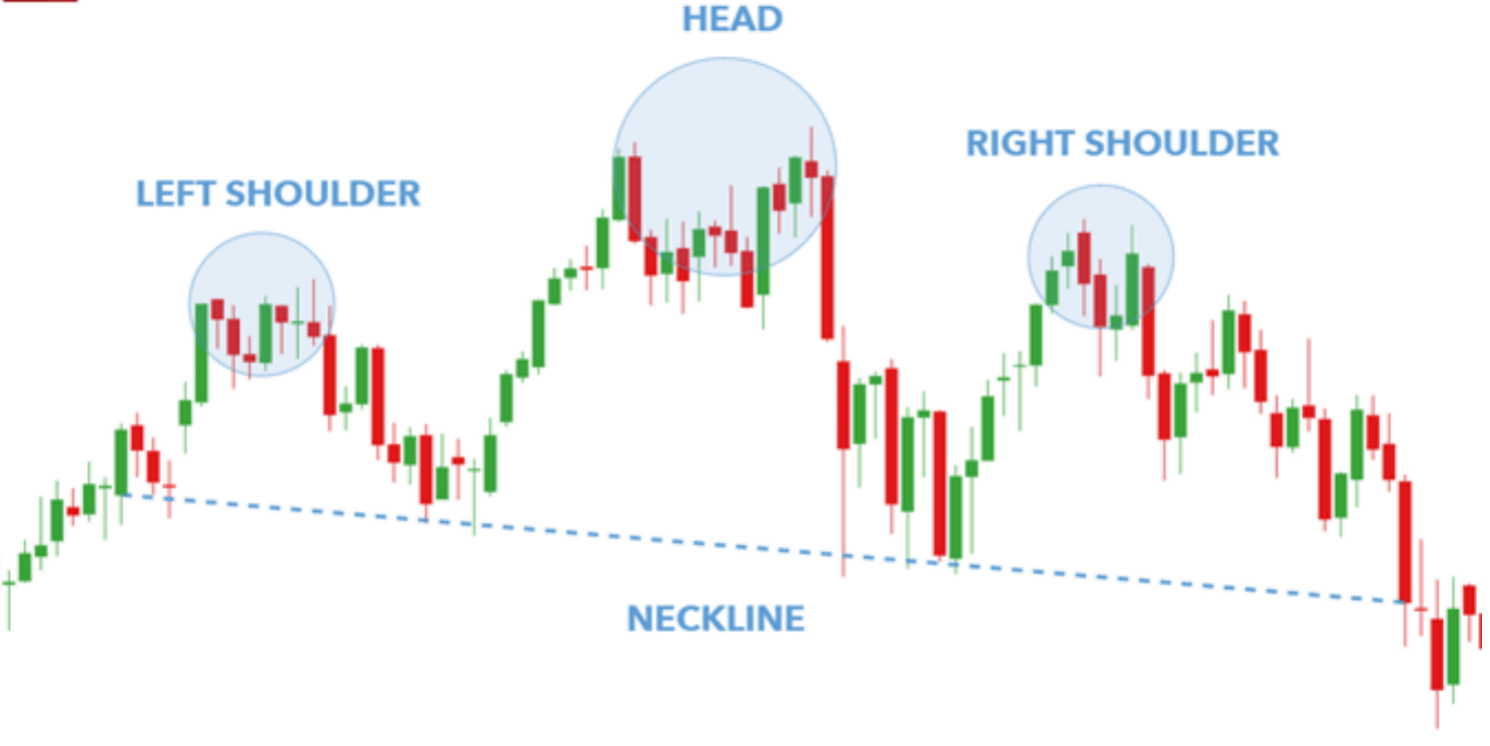
In contrast, the Inverse Head and Shoulders pattern (formally known as the "reverse head and shoulders pattern") follows the same structure as the standard head and shoulders pattern, except reversed. When an inverse head and shoulders pattern occurs during a downtrend (see image below), inmates reverse the downward trend as higher lows are made.

Limitations of the inverse head and shoulders
All major reversal patterns have unique characteristics, but the inverse head & shoulder pattern is the most common and reliable. This system features a left shoulder, right shoulder, and head and has three parts. Left shoulders are often formed following a long falling phase during which there are many volumes. As a result, it is generally common to see a small rise towards the end of the left shoulder, which usually occurs with low volume.
When the inverse head forms, it takes up a great volume, consuming less subsequent reaction. Accordingly, at this point, the rice should rise to somewhere near the peak of the left shoulder to conform to proper form.
A fall then forms the right shoulder, which usually has less weight than the left shoulder. It is possible to draw a neckline across the tops of the left shoulder, the inverse head, and the right shoulder. The final confirmation and completion of the inverse head and shoulders formation break this neckline on the rise from the right shoulder. Then the signals to buy are given.
Sometimes, after prices surge above the neckline, prices pullback towards the neckline, and sometimes even below the neckline, before continuing their upward trend. This pullback can be used to extend the positions in the original direction.
In this case, though, it is a dominant reversal pattern occurring daily. Therefore, the inverse head and shoulders can be highly profitable if you see a higher timeframe.
Bottom line
An inverse head and shoulders pattern indicates that the market is volatile. Whenever the bear resists by pushing down the asset price, the bull attempts to take control of the market. For the pattern to conclude, the price must drop three times and then rise to break the neckline, showing that bull control has finally taken over.
During this phase, the volume of trade must rise substantially to confirm the reversal of the trend. In the absence of an increase in the volume, the pattern is not a reversal formation.
A confirmed reversal pattern is the inverse head and shoulders. As soon as the asset rallies through the break of the right shoulder, the pattern has been completed. The bull currently controls the market and establishes an upward trend, so traders take a long position.
Traders can successfully enter just above the neckline of the formation and place stop-loss just below the right shoulder of the formation using this comprehensive format. Nevertheless, it is important to identify patterns early enough to position oneself accordingly. Price drops in the uptrend are common, allowing traders to buy a second time, although it is not guaranteed.
Frequently asked questions
What do you face after the head and shoulders pattern ends?
Typically, the head and shoulders pattern indicates a reversal on a longer-term basis. So after the pattern has followed through and played out, we might expect it to trend in the same direction as the follow-through. For example, an inverse head-and-shoulders pattern may indicate the bottom of the crash before the price rises. On the other hand, the inverse head and shoulders pattern can signify that the bull market has peaked before the bear market begins.
When is the head and shoulders pattern invalidated?
Invalidating the head and shoulders pattern causes the right shoulder to form and then break before the neckline can break. As a result, the stop-loss order was placed just below the right shoulder in the example above. By the time it crosses the neckline, the inverse head and shoulders pattern won't be a viable play. Likewise, if the price rises from the right shoulder support line, approach the neckline but is rejected before crossing, and breaks back down below the right shoulder, it will no longer be a viable play.
Can reverse head and shoulders be bullish?
This pattern is a bullish reversal pattern that represents the inverse head and shoulders. Before this pattern developed, price action and the trend were both bearish. An inverse head-and-shoulders pattern usually appears at the bottom of a market move.
Is it possible to invalidate a head and shoulders pattern?
Invalidating the head-and-shoulders pattern will be formed and broken before the neckline is broken. For this reason, the stop-loss order sits just below the right shoulder. If the price climbs above the right-shoulder support line and tries to cross the neckline but is rejected before crossing it, breaking back down below the right shoulder, the inverse head-and-shoulders pattern is no longer a viable play.
What is the reliability of inverse head and shoulders?
Our research indicates that reversal patterns are more frequent on a daily timeframe. Therefore, the inverse head and shoulders can be very reliable and profitable as long as you use a longer time frame and follow the tips outlined in this post.


Trending Articles
- Who Is Andrew Tate and Why Is He Famous? 10 Things to Know the Controversial Influencer
Discover who is Andrew Tate and why he's making waves in the digital sphere. Uncover 10 intriguing facts about this controversial influencer, his journey, and his impact on the online world.
2024-03-01 TOPONE Markets Analyst - Andrew Tate Net Worth 2024: Is the Internet's Most Controversial Man Worth $800 Million?
Explore the enigmatic Andrew Tate's net worth and delve into the controversies surrounding the internet's most polarizing figure. Is he truly worth $800 million? Uncover the truth behind his wealth and reputation here.
2024-02-23 TOPONE Markets Analyst - 20 Strongest Currencies in the World in 2024
Want to know the strongest currencies in the world in 2024? Here are the list for you!
2024-01-30 TOPONE Markets Analyst - Falling Wedge Pattern: The Ultimate Guide
A falling wedge is a bullish pattern characterized by a wide top and shrinking bottom. It is an extremely bullish pattern in a trading market.
2023-09-25 TOPONE Markets Analyst

 Bonus!

Bonus rebate to help investors grow in the trading world!