Olympic Economic Impact: How Paris Writes a New Chapter of Prosperity?
The 2024 Paris Olympics has re-injected vitality into the French economy, especially in terms of ticket sales, TV broadcast rights income, tourism growth and consumer spending. However, the aviation industry encountered headwinds during this event and experienced an unexpected decline. This phenomenon raises a series of questions. What is the reason behind this trend in the aviation industry? How will it affect the overall development of the French economy?
Introduction

The curtain of the 2024 Paris Olympic Games is slowly falling. This grand sports event not only left countless wonderful moments on the sports field, but also painted a colorful mark in the history of French economic development. According to the latest monthly economic survey released by the Bank of France on August 9, the French economy is expected to achieve a growth of at least 0.35% in the third quarter, benefiting from the promotion of various related activities during the Olympic Games. This figure is undoubtedly an exciting jump compared to the 0.3% increase in the previous two quarters.
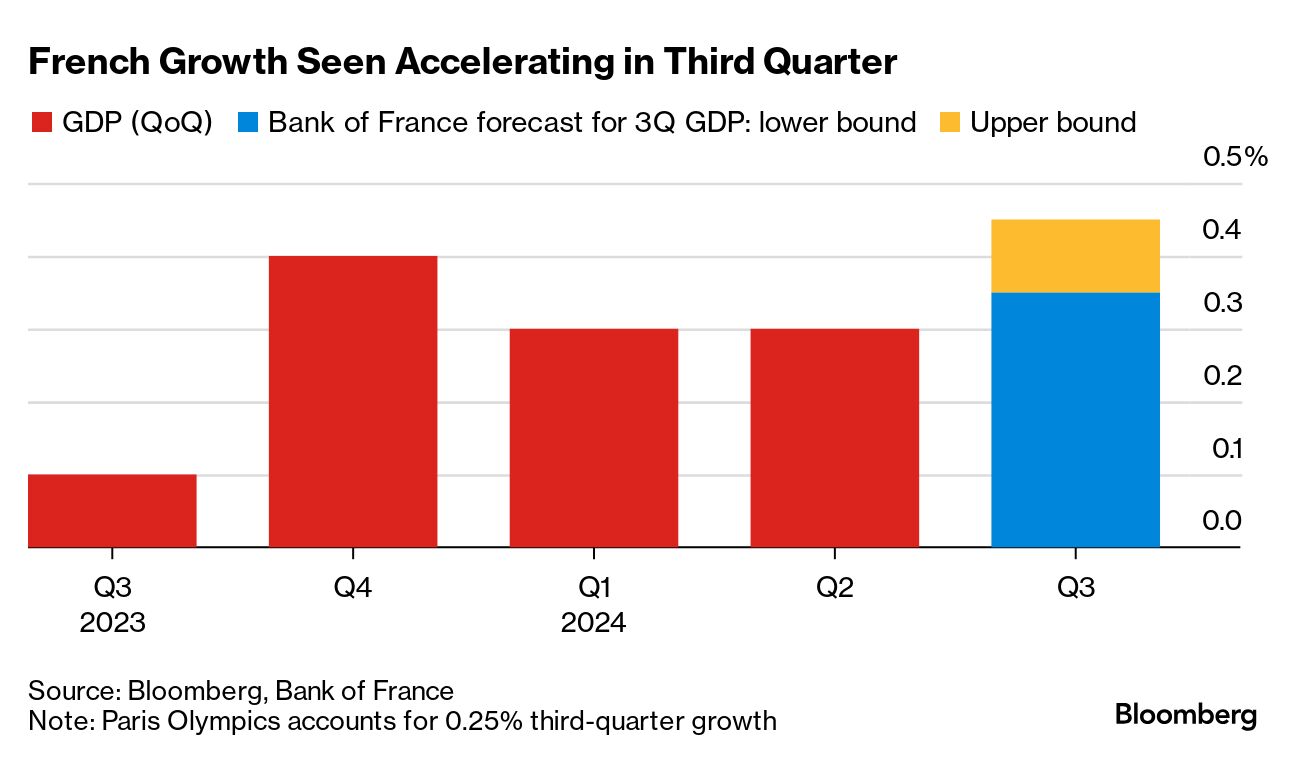
After in-depth analysis of data from 8,500 companies and institutions, the Bank of France pointed out that the main driving force for GDP growth is the income from ticket sales and television broadcast rights contracts for the Olympic Games, which is expected to contribute 0.35% to 0.45% to economic growth. This prediction coincides with the analysis of many French institutions, showing that the positive impact of the Olympic Games on the economy has formed an industry consensus.
However, not all industries can benefit from this Olympic feast shared by all. Although most industries have made huge profits from the hosting of the Olympic Games, the aviation industry is struggling to find strategies to maintain this "Olympic effect." This phenomenon reminds us that the boosting effect of large-scale events on the economy is multi-dimensional and is also accompanied by differentiated impacts among industries.
Today, let us delve into the positive impact of the Olympic Games on the French economy, allowing investors to explore investment opportunities and avoid risks at the same time.
From Tickets to Tourism: France Welcomes a New Wave of Growth
According to an in-depth analysis by the French National Institute of Statistics and Economic Studies (INSEE), the boost to the French economy from the Paris Olympics cannot be underestimated. The report predicts that the Olympics will directly contribute 0.3 percentage points to the growth of gross domestic product (GDP) in the third quarter, helping to increase the overall economic growth rate to 0.5%.
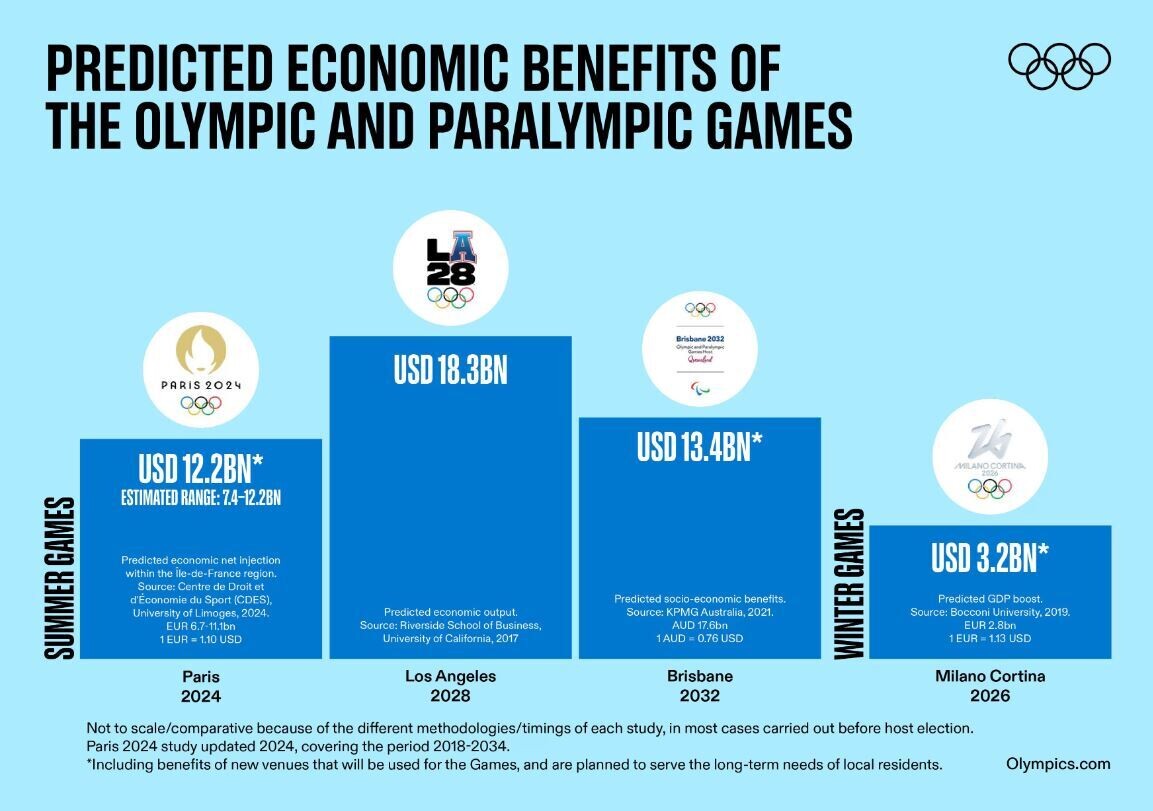
Among them, the sales of Olympic tickets and the signing of television broadcasting rights have contributed greatly, accounting for 0.25 percentage points of growth alone. The influx of tourists has also added 0.05 percentage points to the growth of the transportation, hotel and catering industries.
Center for Law and Economics of Sport (CDES) is even more optimistic. They believe that from the start of preparations for the Olympics in 2018 to 2034, ten years after the end of the event in 2024, the "Olympic effect" will bring economic benefits of 6.7 billion to 11.1 billion euros to the Ile-de-France region. The center pointed out that more than 80% of the economic impetus will be released quickly during the preparation and hosting of the Olympics. The remaining effects will gradually emerge in the following ten years. The tourism industry in the Ile-de-France region is expected to gain additional revenue of 201 million to 1.236 billion euros.
The Bank of France warned that the impact of the Paris Olympics and the instability of the political environment may bring volatility risks to the growth forecast for the third quarter. Despite this, the French Tourism Bureau still expects 11.3 million people to flock to the French capital during the Olympics, including 1.5 million overseas tourists.

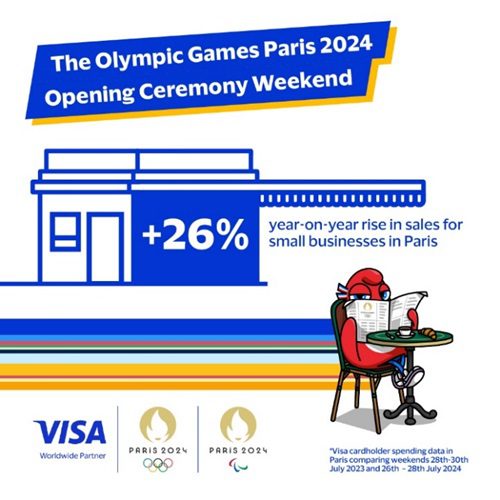
VISA, the official global payments technology partner of the Olympics, reported a 26% year-on-year surge in sales to VISA cardholders from small businesses in Paris during the first weekend after the Games. In addition, consumer spending in event-hosting cities such as Saint-Etienne, Lille and Marseille also experienced significant increases of 214%, 100% and 38%.
Charlotte Hogg, CEO of VISA Europe, emphasized: "Our latest data clearly shows that VISA cardholders' consumer spending increased significantly during the opening weekend." Breaking down the specific countries, US VISA cardholders account for the largest proportion of overseas Olympic-related consumption, reaching 29%. Spending increases were most significant in Japan and Brazil.

In terms of industries, consumption growth in theaters and museums is particularly prominent, with an increase of up to 150%. Consumption growth in the food and groceries, catering, retail and entertainment sectors also ranged from 18% to 42%. In terms of accommodation, Airbnb CEO Brian Chesky revealed that approximately 430,000 Airbnb guests stayed in the Paris area during the Olympics, a number that exceeded expectations. In addition, Airbnb has signed a $500 million contract with the International Olympic Organizing Committee as a global sponsor of the Summer and Winter Olympic Games from Tokyo 2020 to Los Angeles 2028.
NBCUniversal and Warner Bros. Discovery own the U.S. and pan-European television rights to the Olympics respectively. In terms of ratings, the two said that TV and streaming media ratings have reached several times that of the Tokyo Olympics, further proving the huge appeal and influence of the Paris Olympics on a global scale.
Counter-currents in the Aviation Industry within Economic Resonance
While the Paris Olympics have provided a significant boost to the French economy, the aviation industry presents a different picture. According to the financial report of Delta Air Lines, the 2024 Paris Olympics will have a negative impact on its revenue, which is expected to result in a loss of approximately US$100 million.
Delta Air Lines CEO Ed Bastian has said that people will not choose to travel to Paris unless they are going to the Olympics. Air France-KLM also expects losses of between US$162 million and US$170 million. Air Canada also reported that the Olympics impacted its quarterly profit, which fell 51% year-over-year to C$410 million (approximately US$298 million) in the second quarter.
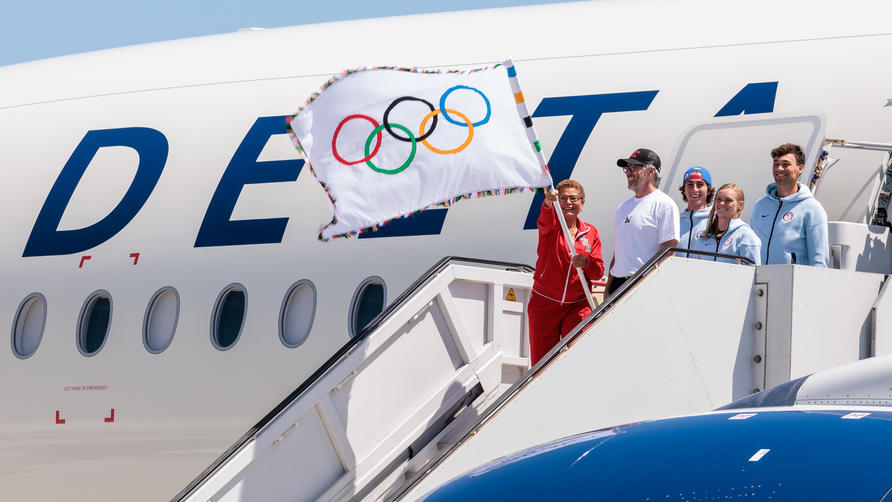
However, airlines have not given up on turning the Olympic event into a business opportunity. Delta Air Lines, the official airline of Team USA for the 2021 to 2028 Olympic and Paralympic Games, said it will still seek to extend its sponsorship agreement through the 2034 Salt Lake City-Utah Winter Olympics. Delta Chief Communications Officer Tim Mapes said he hopes to increase brand awareness through sponsorships, including transporting all U.S. Olympic athletes, especially among international passengers. He believes this will drive its future growth.
Although the aviation industry encountered headwinds during the Paris Olympics, it did not affect the overall progress of the French economy. At the same time, the booming development of tourism and service industries has also injected a boost into the national economy. This economic diversification highlights the flexibility and vitality of the French economy.
While airlines may face a temporary decline in earnings, a boom in other service industries has contributed handsome returns to the economy. For the government, the key lies in how to wisely support and balance the challenged aviation industry and ensure comprehensive and sustained economy growth by using these industry surpluses . Through this complementary and mutually supportive economic strategy, France can maintain its development momentum and push the economic ship forward steadily.
The Paris Brokerage Union Index is a barometer of the French economy. What investment opportunities will there be in the future? Next, we will introduce this aspect to you in detail based on the technical analysis and trend judgment of the French CAC40 index.
Technical Analysis and Trend Forecasting for the French CAC 40 Index
France CAC40 Index (Daily Chart)
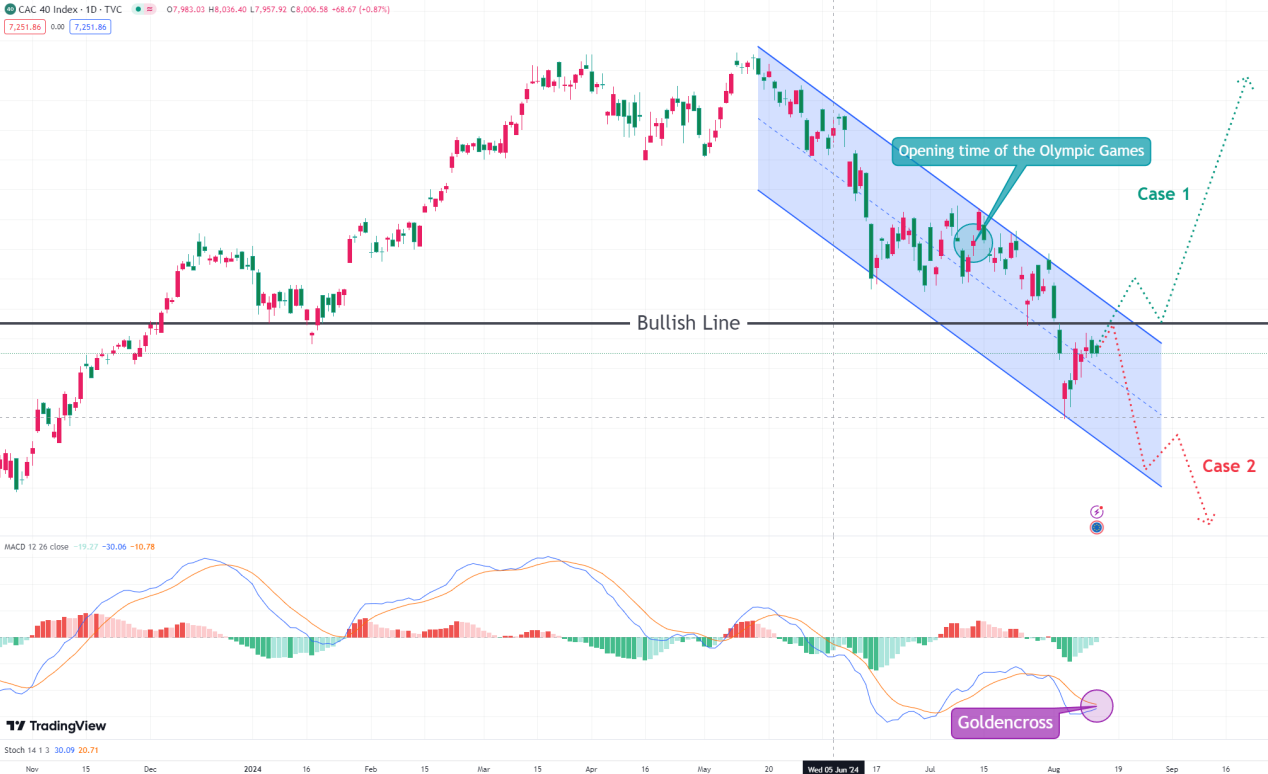
On the daily chart, the French CAC 40 index currently appears to be contained within a descending channel. Although the market briefly showed upward momentum after the opening of the Olympic Games, this momentum did not last. The index quickly fell back and hit a new low, once touching a level of around 7030 points.
However, the index staged another strong reversal, with sentiment boosted by the conclusion of the Olympics and improving French economic data. Currently, the index is facing pressure to break through a long-short dividing line spanning nearly 8 months and the upper edge of the downward channel. This is undoubtedly a difficult task.
From a technical analysis perspective, the negative column of the MACD indicator has begun to shrink. The DIF line is about to cross the DEA line and form a golden cross, which may indicate that the market will usher in certain upward momentum. If the index can complete this breakthrough, then the market outlook may show a more positive trend. However, MACD is still some distance away from the 0 axis and has not yet formed a perfect golden cross trend of breaking 0, which means that there may still be uncertainty in the market.
In this case, investors need to prepare for two possible situations:
Situation 1: The index successfully breaks through the long-short dividing line and the upper edge of the downward channel, thus opening up room for further growth;
Situation 2: The index fails to break through and continues to maintain the current shock pattern or moves downward to find support. Investors should pay close attention to the actual market trends and flexibly adjust their investment strategies according to real-time market changes.
Overall, the Paris Olympics not only added a glorious page to the history of world sports, but also injected new vitality into the booming French economy. With the successful conclusion of the Olympic Games, people are still curious about how this economic power inspired by sportsmanship will continue to affect the economic landscape of France and even the world.
Introduction

The curtain of the 2024 Paris Olympic Games is slowly falling. This grand sports event not only left countless wonderful moments on the sports field, but also painted a colorful mark in the history of French economic development. According to the latest monthly economic survey released by the Bank of France on August 9, the French economy is expected to achieve a growth of at least 0.35% in the third quarter, benefiting from the promotion of various related activities during the Olympic Games. This figure is undoubtedly an exciting jump compared to the 0.3% increase in the previous two quarters.

After in-depth analysis of data from 8,500 companies and institutions, the Bank of France pointed out that the main driving force for GDP growth is the income from ticket sales and television broadcast rights contracts for the Olympic Games, which is expected to contribute 0.35% to 0.45% to economic growth. This prediction coincides with the analysis of many French institutions, showing that the positive impact of the Olympic Games on the economy has formed an industry consensus.
However, not all industries can benefit from this Olympic feast shared by all. Although most industries have made huge profits from the hosting of the Olympic Games, the aviation industry is struggling to find strategies to maintain this "Olympic effect." This phenomenon reminds us that the boosting effect of large-scale events on the economy is multi-dimensional and is also accompanied by differentiated impacts among industries.
Today, let us delve into the positive impact of the Olympic Games on the French economy, allowing investors to explore investment opportunities and avoid risks at the same time.
From Tickets to Tourism: France Welcomes a New Wave of Growth
According to an in-depth analysis by the French National Institute of Statistics and Economic Studies (INSEE), the boost to the French economy from the Paris Olympics cannot be underestimated. The report predicts that the Olympics will directly contribute 0.3 percentage points to the growth of gross domestic product (GDP) in the third quarter, helping to increase the overall economic growth rate to 0.5%.

Among them, the sales of Olympic tickets and the signing of television broadcasting rights have contributed greatly, accounting for 0.25 percentage points of growth alone. The influx of tourists has also added 0.05 percentage points to the growth of the transportation, hotel and catering industries.
Center for Law and Economics of Sport (CDES) is even more optimistic. They believe that from the start of preparations for the Olympics in 2018 to 2034, ten years after the end of the event in 2024, the "Olympic effect" will bring economic benefits of 6.7 billion to 11.1 billion euros to the Ile-de-France region. The center pointed out that more than 80% of the economic impetus will be released quickly during the preparation and hosting of the Olympics. The remaining effects will gradually emerge in the following ten years. The tourism industry in the Ile-de-France region is expected to gain additional revenue of 201 million to 1.236 billion euros.
The Bank of France warned that the impact of the Paris Olympics and the instability of the political environment may bring volatility risks to the growth forecast for the third quarter. Despite this, the French Tourism Bureau still expects 11.3 million people to flock to the French capital during the Olympics, including 1.5 million overseas tourists.

VISA, the official global payments technology partner of the Olympics, reported a 26% year-on-year surge in sales to VISA cardholders from small businesses in Paris during the first weekend after the Games. In addition, consumer spending in event-hosting cities such as Saint-Etienne, Lille and Marseille also experienced significant increases of 214%, 100% and 38%.

Charlotte Hogg, CEO of VISA Europe, emphasized: "Our latest data clearly shows that VISA cardholders' consumer spending increased significantly during the opening weekend." Breaking down the specific countries, US VISA cardholders account for the largest proportion of overseas Olympic-related consumption, reaching 29%. Spending increases were most significant in Japan and Brazil.

In terms of industries, consumption growth in theaters and museums is particularly prominent, with an increase of up to 150%. Consumption growth in the food and groceries, catering, retail and entertainment sectors also ranged from 18% to 42%. In terms of accommodation, Airbnb CEO Brian Chesky revealed that approximately 430,000 Airbnb guests stayed in the Paris area during the Olympics, a number that exceeded expectations. In addition, Airbnb has signed a $500 million contract with the International Olympic Organizing Committee as a global sponsor of the Summer and Winter Olympic Games from Tokyo 2020 to Los Angeles 2028.
NBCUniversal and Warner Bros. Discovery own the U.S. and pan-European television rights to the Olympics respectively. In terms of ratings, the two said that TV and streaming media ratings have reached several times that of the Tokyo Olympics, further proving the huge appeal and influence of the Paris Olympics on a global scale.
Counter-currents in the Aviation Industry within Economic Resonance
While the Paris Olympics have provided a significant boost to the French economy, the aviation industry presents a different picture. According to the financial report of Delta Air Lines, the 2024 Paris Olympics will have a negative impact on its revenue, which is expected to result in a loss of approximately US$100 million.
Delta Air Lines CEO Ed Bastian has said that people will not choose to travel to Paris unless they are going to the Olympics. Air France-KLM also expects losses of between US$162 million and US$170 million. Air Canada also reported that the Olympics impacted its quarterly profit, which fell 51% year-over-year to C$410 million (approximately US$298 million) in the second quarter.

However, airlines have not given up on turning the Olympic event into a business opportunity. Delta Air Lines, the official airline of Team USA for the 2021 to 2028 Olympic and Paralympic Games, said it will still seek to extend its sponsorship agreement through the 2034 Salt Lake City-Utah Winter Olympics. Delta Chief Communications Officer Tim Mapes said he hopes to increase brand awareness through sponsorships, including transporting all U.S. Olympic athletes, especially among international passengers. He believes this will drive its future growth.
Although the aviation industry encountered headwinds during the Paris Olympics, it did not affect the overall progress of the French economy. At the same time, the booming development of tourism and service industries has also injected a boost into the national economy. This economic diversification highlights the flexibility and vitality of the French economy.
While airlines may face a temporary decline in earnings, a boom in other service industries has contributed handsome returns to the economy. For the government, the key lies in how to wisely support and balance the challenged aviation industry and ensure comprehensive and sustained economy growth by using these industry surpluses . Through this complementary and mutually supportive economic strategy, France can maintain its development momentum and push the economic ship forward steadily.
The Paris Brokerage Union Index is a barometer of the French economy. What investment opportunities will there be in the future? Next, we will introduce this aspect to you in detail based on the technical analysis and trend judgment of the French CAC40 index.
Technical Analysis and Trend Forecasting for the French CAC 40 Index

France CAC40 Index (Daily Chart)
On the daily chart, the French CAC 40 index currently appears to be contained within a descending channel. Although the market briefly showed upward momentum after the opening of the Olympic Games, this momentum did not last. The index quickly fell back and hit a new low, once touching a level of around 7030 points.
However, the index staged another strong reversal, with sentiment boosted by the conclusion of the Olympics and improving French economic data. Currently, the index is facing pressure to break through a long-short dividing line spanning nearly 8 months and the upper edge of the downward channel. This is undoubtedly a difficult task.
From a technical analysis perspective, the negative column of the MACD indicator has begun to shrink. The DIF line is about to cross the DEA line and form a golden cross, which may indicate that the market will usher in certain upward momentum. If the index can complete this breakthrough, then the market outlook may show a more positive trend. However, MACD is still some distance away from the 0 axis and has not yet formed a perfect golden cross trend of breaking 0, which means that there may still be uncertainty in the market.
In this case, investors need to prepare for two possible situations:
Situation 1: The index successfully breaks through the long-short dividing line and the upper edge of the downward channel, thus opening up room for further growth;
Situation 2: The index fails to break through and continues to maintain the current shock pattern or moves downward to find support. Investors should pay close attention to the actual market trends and flexibly adjust their investment strategies according to real-time market changes.
Overall, the Paris Olympics not only added a glorious page to the history of world sports, but also injected new vitality into the booming French economy. With the successful conclusion of the Olympic Games, people are still curious about how this economic power inspired by sportsmanship will continue to affect the economic landscape of France and even the world.

Trending Articles
- Who Is Andrew Tate and Why Is He Famous? 10 Things to Know the Controversial Influencer
Discover who is Andrew Tate and why he's making waves in the digital sphere. Uncover 10 intriguing facts about this controversial influencer, his journey, and his impact on the online world.
2024-03-01
TOPONE Markets Analyst - Andrew Tate Net Worth 2024: Is the Internet's Most Controversial Man Worth $800 Million?
Explore the enigmatic Andrew Tate's net worth and delve into the controversies surrounding the internet's most polarizing figure. Is he truly worth $800 million? Uncover the truth behind his wealth and reputation here.
2024-02-23
TOPONE Markets Analyst - 20 Strongest Currencies in the World in 2024
Want to know the strongest currencies in the world in 2024? Here are the list for you!
2024-01-30
TOPONE Markets Analyst - Falling Wedge Pattern: The Ultimate Guide
A falling wedge is a bullish pattern characterized by a wide top and shrinking bottom. It is an extremely bullish pattern in a trading market.
2023-09-25
TOPONE Markets Analyst
Bonus!

Bonus rebate to help investors grow in the trading world!