10 Best Cryptocurrencies to Invest in 2024
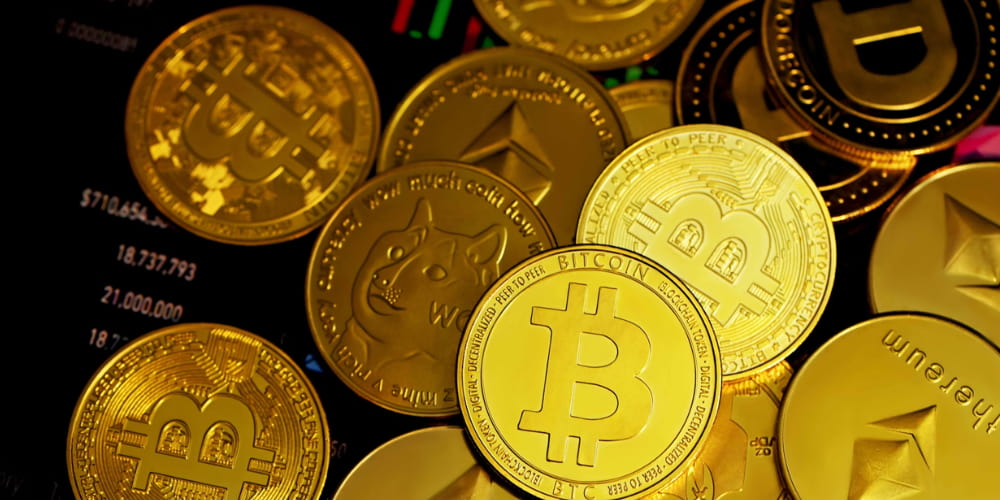
Over recent years, Bitcoin and various other cryptocurrencies have seen a significant surge in popularity. Are you considering investing in crypto? Here are the top 10 cryptocurrencies worth purchasing in 2024.

As the market becomes more saturated with options in 2024, choosing the right cryptocurrency to invest in will be crucial. For those new to the crypto realm, the sheer variety of cryptocurrencies, ranging from Bitcoin and Ethereum to Dogecoin and Tether, can be daunting to navigate. To provide guidance, we've curated a list of the top 10 cryptocurrencies for investment based on their market capitalization – the total value of all currently circulating coins.
By conducting thorough research and understanding project fundamentals and market trends, you can make clever decisions and secure a prosperous financial future through cryptocurrency investment. We've identified 10 cryptocurrencies with promising long-term potential returns to facilitate this process. These selections are grounded in robust fundamentals, transparent development processes, and the capacity to influence the dynamic landscape of decentralized finance.
Let's wait no longer and find out the 10 best cryptocurrencies and where to buy them.
What Is Cryptocurrency?
Cryptocurrency is a digital currency. Banks are not required to verify transactions. Instead, the peer-to-peer system enables anyone to send and receive payments anywhere. Cryptocurrency trading is betting on the rise or fall of cryptocurrency prices through a CFD trading account or directly buying and selling cryptocurrencies through an exchange. Instead of being physical currencies carried and exchanged in the real world, cryptocurrency payments exist purely as digital entries. Your cryptocurrency funds transaction is recorded in the public ledger. Cryptocurrencies are stored in digital wallets.
Cryptocurrencies get their name from the use of encryption to verify transactions. Advanced coding is needed to store and transmit cryptocurrency data between the public ledger and wallets. The purpose of encryption is to provide security.
Why Invest in Cryptocurrency?
Gain potential returns
The term "potential" can be applied in two distinct manners when discussing cryptocurrency. Firstly, crypto holds significant potential due to its novelty, paving the way for countless future opportunities. For instance, if a leading non-crypto brand integrates cryptocurrency technology into mainstream use, Ether (ETH) will substantially increase in value. Given this expansive potential, early investors can reap significant returns. Bitcoin is a prime example of how widespread adoption can propel a cryptocurrency's price to new heights.
Diversify your portfolio
Cryptocurrency allows investors to diversify their investment portfolio. Although there is limited historical data on the price movement of crypto markets compared to stocks or bonds, the prices seem unrelated to other markets. This characteristic makes cryptocurrencies a valuable tool for portfolio diversification.
Investors can achieve more stable returns by combining assets with minimal price correlation. If your stock portfolio's value decreases, your crypto assets' value may increase, and vice versa. However, cryptocurrencies are generally highly volatile, and if your allocation to crypto assets is too heavy, it could potentially increase the overall volatility of your portfolio.
Protect against inflation
Bitcoin and other cryptocurrencies are often regarded as a hedge against inflation. Bitcoin, for instance, has a fixed cap on the overall number of coins that will ever be produced. Consequently, as the growth of the money supply surpasses the increase in the Bitcoin supply, the price of Bitcoin is anticipated to surge. Moreover, several other cryptocurrencies utilize supply-capping mechanisms, enabling them to function as a hedge against inflation.
Transparency
Cryptocurrency transactions occur within the publicly accessible blockchain ledger. Various tools enable individuals to access transaction details such as origin, time, and amount sent from a wallet address. Furthermore, anyone can view the balance of cryptocurrency in a wallet. Implementing such a high level of transparency can significantly minimize the occurrence of fraudulent transactions. Individuals can substantiate the transfer and receipt of funds or verify the presence of sufficient funds for a transaction.
Security
With possessing the private key for your cryptocurrency wallet, others can authorize transactions or access your funds. If you lose your private key, you cannot recover your funds. Furthermore, the decentralized network and the blockchain system guarantee the security of transactions. The network's security strengthens as more computing power is added.
Accessibility
Cryptocurrency is accessible to everyone. You only need a smartphone or computer to trade cryptocurrencies. Setting up a cryptocurrency wallet is notably quicker than creating a conventional account at a bank. No ID verification, background checks, or credit assessments are necessary. The unbanked are allowed to access financial services without a central authority. Various reasons might prevent individuals from obtaining a traditional bank account or prefer not to acquire one. Utilizing cryptocurrency enables those who eschew conventional banking services to effortlessly engage in online transactions or send money to their loved ones.
10 Best Cryptocurrencies to Invest in 2024
Many crypto analysts believe the next crypto bull run is in progress, although many token prices remain below the peaks established during the last bull market. As a result, crypto investors who make purchases now could see significant gains throughout the rest of 2024 and beyond.
This section will delve deeper into the 10 best cryptocurrencies to buy in 2024. As the bull market intensifies, keep reading to uncover which cryptocurrencies offer the most significant potential for delivering substantial returns.
1. Bitcoin (BTC)

Market cap: $1 trillion
Year-over-year return: 126%
Created in 2009 by Satoshi Nakamoto, Bitcoin (BTC) is the original cryptocurrency. Even after approximately 14 years, Bitcoin remains the most widely recognized and valuable cryptocurrency globally.
Its decentralized nature and transparency make it attractive to investors and users alike. However, critics have voiced concerns regarding its energy-intensive proof-of-work consensus mechanism and highlighted challenges in scaling the network. Furthermore, numerous large-scale cryptocurrency projects have faster transaction speeds than Bitcoin, along with blockchains featuring specialized designs to enhance Bitcoin's functionality.
2. Ethereum (ETH)

Market cap: $359.9 billion
Year-over-year return: 63%
Ethereum emerged as one of the initial alternatives to Bitcoin, known as altcoins. Launched in July 2015, Ethereum is now the most valuable cryptocurrency after Bitcoin. Its blockchain pioneered the concept of smart contracts, facilitating the execution of decentralized applications (dApps). With over 1,400 applications and developer tools, the Ethereum blockchain serves as a versatile platform. Ether serves as the native cryptocurrency of the Ethereum network. In 2023, Ethereum transitioned from a proof-of-work consensus mechanism to a more eco-friendly proof-of-stake transaction verification system. This transition renders Ethereum a more sustainable investment compared to Bitcoin. However, Ethereum's blockchain functionality remains its primary distinguishing feature.
As a programmable blockchain, Ethereum enables the development of decentralized applications and smart contracts in different sectors. The continuous improvement with Ethereum 2.0 aims to enhance scalability and effectiveness, solidifying its role as a fundamental component of Web3. The increasing desire for decentralization in various sectors, a trend that resonates with Ethereum's capabilities, bolsters investor confidence in Ethereum's potential for widespread adoption and sustained value appreciation over the long term.
3. Binance Coin (BNB)

Market cap: $86.4 billion
Year-over-year return: 86%
BNB is the cryptocurrency issued by Binance, renowned as one of the globe's largest cryptocurrency exchanges. Initially, BNB was conceived as a utility token on the Ethereum network, granting users access to discounted trading fees on the Binance platform. However, it has since migrated to Binance's proprietary blockchain. Presently, BNB finds utility in a broad spectrum of transactions, applications, and other use cases. Regrettably, Binance witnessed a decline in its U.S. market share in 2023 following legal action by the SEC, alleging violations of securities laws.
4. Solana (SOL)

Market cap: $65.2 billion
Year-over-year return: 598%
Solana was launched in March 2020, offering features akin to Ethereum, such as support for dApps, smart contracts, and non-fungible tokens.
Solana (SOL) emerges as an enticing cryptocurrency investment choice primarily for its steadfast commitment to speed and scalability. Powered by an innovative proof-of-history consensus mechanism, Solana facilitates exceptionally swift and cost-effective transactions, which is particularly advantageous in sectors like gaming and DeFi, where rapidity reigns supreme.
Continuous technical advancements further enhance Solana's efficiency, cementing its status as a pragmatic blockchain solution with vast real-world applicability. Although the Solana network faced nearly 20 hours of downtime in February 2023, it witnessed a notable price surge following the XRP court ruling. This led to triple-digit gains in 2023, making it the top-performing cryptocurrency on this list.
With the global shift towards blockchain technology for enhanced speed and convenience, Solana's prospects for widespread adoption and substantial value appreciation appear promising. Solana undoubtedly merits consideration for those seeking a cryptocurrency with the potential to shape the future.
5. XRP (XRP)

Market cap: $28.8 billion
Year-over-year return: 23%
XRP, developed by Ripple, serves as a global payments network to provide an alternative to SWIFT, the standard system banks and financial institutions use for money transfers. Ripple asserts that its technology offers faster, more cost-effective, and transparent transactions than the SWIFT system.
XRP is the native cryptocurrency designed for the Ripple network and the XRP Ledger blockchain. In July, XRP received a significant boost when a judge in the Southern District of New York ruled that the cryptocurrency is "not necessarily a security" under certain circumstances, potentially placing it beyond the jurisdiction of the SEC.
6. Dogecoin (DOGE)

Market cap: $21.2 billion
Year-over-year return: 102%
Initially conceived as a playful spoof of Bitcoin in 2013, Dogecoin has become a bona fide investment option for numerous cryptocurrency traders. Its appeal lies in its straightforwardness, the endorsement of prominent figures, and the online charm embodied by its Shiba Inu mascot.
Notably, Dogecoin investor and Tesla CEO Elon Musk has sparked fluctuations in its price through his mentions and references to the cryptocurrency, resulting in volatility. Musk faces legal action from a group of Dogecoin investors who allege unlawful manipulation of its price. Additionally, billionaire entrepreneur Mark Cuban has voiced support for Dogecoin, lauding its potential as a medium of exchange.
7. Toncoin (TON)

Market cap: $19.9 billion
Year-over-year return: 199%
Initially conceived as a layer-1 blockchain intended for Telegram's encrypted messaging platform, Toncoin was subsequently relinquished and later acquired by the TON Foundation. It was then renamed from "Telegram Open Network" to "The Open Network," with both iterations commonly referred to by their acronym: TON. Toncoin, initially dubbed Gram, serves as the native token for TON. It is an application enabling users to purchase, transmit, and securely store funds on TON's highly efficient and eco-friendly network.
In 2018, the encrypted messaging company Telegram developers created the "layer 1" token. The TON network boasts smart contract functionality, offering a speed advantage over Ethereum, with transactions completing quickly in five seconds. However, attracting more developers to build on its network is essential to achieve significant competitiveness in the expansive realm of cryptocurrency projects.
8. Cardano (ADA)

Market cap: $15.7 billion
Year-over-year return: 20%
Launched in September 2017, Cardano is a decentralized proof-of-stake blockchain designed to provide greater efficiency than Bitcoin, Ethereum, and other proof-of-work blockchains prevalent at the time. As Ethereum co-founder Charles Hoskinson founded, its credibility was instantly bolstered within the crypto community.
Like Ethereum, Cardano prioritizes functionality and aspires to become the preferred platform for dApp development and verifiable smart contracts. ADA is the primary cryptocurrency utilized on the network, facilitating transactions and powering dApps. Cardano users can also employ ADA for staking, contributing to verifying network transactions and earning additional tokens in the process.
9. Tether (USDT)

Market cap: $US109.6 billion
Year-over-year return:
In contrast to various cryptocurrencies, Tether (USDT) stands out as a stablecoin linked to the worth of US$1. It is accomplished by maintaining a direct correlation between the token and the USD, ensuring its value remains equivalent to one of these denominations. Theoretically, this setup implies that Tether maintains a more stable value than other digital currencies, making it a preferred choice for investors seeking refuge from the turbulent fluctuations observed in alternative coins.
10. Avalanche (AVAX)

Market cap: $13.1 billion
Year-over-year return: 123%
Avalanche, a relatively recent protocol, was launched with its mainnet going live in September 2020. By May 2024, it had emerged as an attractive cryptocurrency investment option. The project prides itself on learning from past endeavors to become the fastest and most secure blockchain system. Like several others on the market, Avalanche is an innovative contract platform enabling the development of decentralized applications (dApps).
What distinguishes Avalanche is its compatibility with Ethereum, allowing for seamless integration with Ethereum smart contracts. Its native token, AVAX, facilitates transaction fees and governance. This interoperability bridges the gap between established networks and emerging innovations, fostering a dynamic ecosystem for value creation. With the increasing demand for interconnected blockchains, Avalanche stands strategically positioned to allure forward-thinking developers and investors. For those seeking a cryptocurrency capable of powering the next wave of blockchain solutions, Avalanche merits serious consideration.
How to Buy Cryptocurrencies?
You may be wondering how to trade cryptocurrency safely. There are usually three steps involved. These are:
Step 1. Choose a platform
First of all, decide which platform to use. Typically, you can choose between an online broker or a dedicated cryptocurrency exchange:
Online Brokerage. These online brokers offer a way to trade cryptocurrencies and other financial assets such as stocks, forex, and ETFs. These platforms provide lower or zero transaction costs. Popular options include Robinhood, SoFi, Binance, TOPONE Markets, etc.
Cryptocurrency exchange. Various cryptocurrency exchanges are available, each offering different crypto coins, interest-bearing account options, and more. They charge based on the asset.
When comparing different platforms, consider which cryptocurrencies they offer, their fees, security features, storage and withdrawal options, and educational resources.
Step 2. Fund your account
After you've chosen a platform, it's time to fund your account and start trading. Users cannot purchase cryptocurrencies with their debit or credit card using fiat (i.e., government-issued) currencies such as USD, GBP, or EUR, although this varies by platform.
Using credit cards for cryptocurrency purchases can be risky, and some exchanges do not support it. Besides, Some credit card companies do not allow cryptocurrency transactions. This is because cryptocurrencies are highly volatile, and with some assets, risking debt (or potentially paying high credit card transaction fees) is not advisable.
Some platforms accept wire and ACH transfers. Payment methods and the time required to deposit or withdraw money vary depending on the platform. Likewise, the time it takes for your deposit to clear varies by the payment method.
The cost is an essential factor to consider. Depending on the payment method and platform, these include potential deposits, withdrawals, and transaction fees.
Step 3. Place an order
You can buy cryptocurrencies from your broker's or exchange's web or mobile apps. Just head to the official website and follow their instructions.

As the market becomes more saturated with options in 2024, choosing the right cryptocurrency to invest in will be crucial. For those new to the crypto realm, the sheer variety of cryptocurrencies, ranging from Bitcoin and Ethereum to Dogecoin and Tether, can be daunting to navigate. To provide guidance, we've curated a list of the top 10 cryptocurrencies for investment based on their market capitalization – the total value of all currently circulating coins.
By conducting thorough research and understanding project fundamentals and market trends, you can make clever decisions and secure a prosperous financial future through cryptocurrency investment. We've identified 10 cryptocurrencies with promising long-term potential returns to facilitate this process. These selections are grounded in robust fundamentals, transparent development processes, and the capacity to influence the dynamic landscape of decentralized finance.
Let's wait no longer and find out the 10 best cryptocurrencies and where to buy them.
What Is Cryptocurrency?
Cryptocurrency is a digital currency. Banks are not required to verify transactions. Instead, the peer-to-peer system enables anyone to send and receive payments anywhere. Cryptocurrency trading is betting on the rise or fall of cryptocurrency prices through a CFD trading account or directly buying and selling cryptocurrencies through an exchange. Instead of being physical currencies carried and exchanged in the real world, cryptocurrency payments exist purely as digital entries. Your cryptocurrency funds transaction is recorded in the public ledger. Cryptocurrencies are stored in digital wallets.
Cryptocurrencies get their name from the use of encryption to verify transactions. Advanced coding is needed to store and transmit cryptocurrency data between the public ledger and wallets. The purpose of encryption is to provide security.
Why Invest in Cryptocurrency?
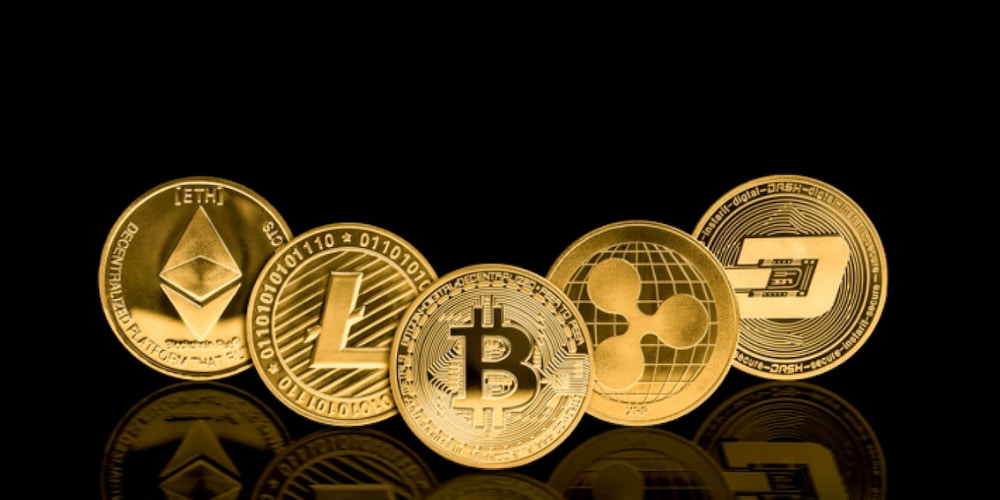
Gain potential returns
The term "potential" can be applied in two distinct manners when discussing cryptocurrency. Firstly, crypto holds significant potential due to its novelty, paving the way for countless future opportunities. For instance, if a leading non-crypto brand integrates cryptocurrency technology into mainstream use, Ether (ETH) will substantially increase in value. Given this expansive potential, early investors can reap significant returns. Bitcoin is a prime example of how widespread adoption can propel a cryptocurrency's price to new heights.
Diversify your portfolio
Cryptocurrency allows investors to diversify their investment portfolio. Although there is limited historical data on the price movement of crypto markets compared to stocks or bonds, the prices seem unrelated to other markets. This characteristic makes cryptocurrencies a valuable tool for portfolio diversification.
Investors can achieve more stable returns by combining assets with minimal price correlation. If your stock portfolio's value decreases, your crypto assets' value may increase, and vice versa. However, cryptocurrencies are generally highly volatile, and if your allocation to crypto assets is too heavy, it could potentially increase the overall volatility of your portfolio.
Protect against inflation
Bitcoin and other cryptocurrencies are often regarded as a hedge against inflation. Bitcoin, for instance, has a fixed cap on the overall number of coins that will ever be produced. Consequently, as the growth of the money supply surpasses the increase in the Bitcoin supply, the price of Bitcoin is anticipated to surge. Moreover, several other cryptocurrencies utilize supply-capping mechanisms, enabling them to function as a hedge against inflation.
Transparency
Cryptocurrency transactions occur within the publicly accessible blockchain ledger. Various tools enable individuals to access transaction details such as origin, time, and amount sent from a wallet address. Furthermore, anyone can view the balance of cryptocurrency in a wallet. Implementing such a high level of transparency can significantly minimize the occurrence of fraudulent transactions. Individuals can substantiate the transfer and receipt of funds or verify the presence of sufficient funds for a transaction.
Security
With possessing the private key for your cryptocurrency wallet, others can authorize transactions or access your funds. If you lose your private key, you cannot recover your funds. Furthermore, the decentralized network and the blockchain system guarantee the security of transactions. The network's security strengthens as more computing power is added.
Accessibility
Cryptocurrency is accessible to everyone. You only need a smartphone or computer to trade cryptocurrencies. Setting up a cryptocurrency wallet is notably quicker than creating a conventional account at a bank. No ID verification, background checks, or credit assessments are necessary. The unbanked are allowed to access financial services without a central authority. Various reasons might prevent individuals from obtaining a traditional bank account or prefer not to acquire one. Utilizing cryptocurrency enables those who eschew conventional banking services to effortlessly engage in online transactions or send money to their loved ones.
10 Best Cryptocurrencies to Invest in 2024
Many crypto analysts believe the next crypto bull run is in progress, although many token prices remain below the peaks established during the last bull market. As a result, crypto investors who make purchases now could see significant gains throughout the rest of 2024 and beyond.
This section will delve deeper into the 10 best cryptocurrencies to buy in 2024. As the bull market intensifies, keep reading to uncover which cryptocurrencies offer the most significant potential for delivering substantial returns.
1. Bitcoin (BTC)
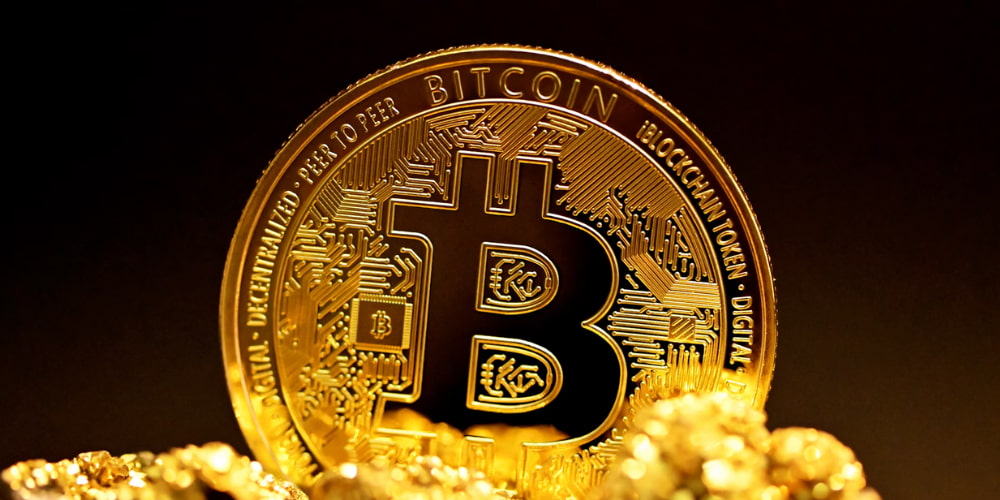
Market cap: $1 trillion
Year-over-year return: 126%
Created in 2009 by Satoshi Nakamoto, Bitcoin (BTC) is the original cryptocurrency. Even after approximately 14 years, Bitcoin remains the most widely recognized and valuable cryptocurrency globally.
Its decentralized nature and transparency make it attractive to investors and users alike. However, critics have voiced concerns regarding its energy-intensive proof-of-work consensus mechanism and highlighted challenges in scaling the network. Furthermore, numerous large-scale cryptocurrency projects have faster transaction speeds than Bitcoin, along with blockchains featuring specialized designs to enhance Bitcoin's functionality.
2. Ethereum (ETH)
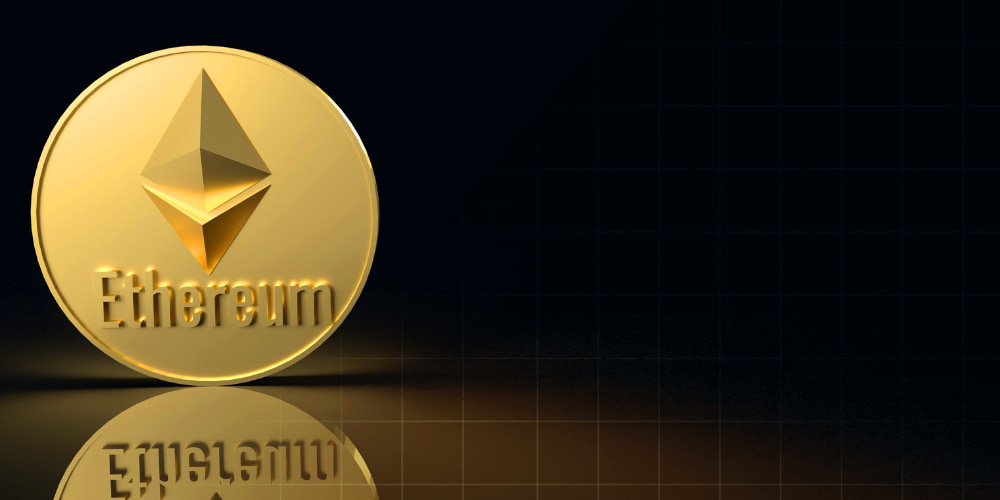
Market cap: $359.9 billion
Year-over-year return: 63%
Ethereum emerged as one of the initial alternatives to Bitcoin, known as altcoins. Launched in July 2015, Ethereum is now the most valuable cryptocurrency after Bitcoin. Its blockchain pioneered the concept of smart contracts, facilitating the execution of decentralized applications (dApps). With over 1,400 applications and developer tools, the Ethereum blockchain serves as a versatile platform. Ether serves as the native cryptocurrency of the Ethereum network. In 2023, Ethereum transitioned from a proof-of-work consensus mechanism to a more eco-friendly proof-of-stake transaction verification system. This transition renders Ethereum a more sustainable investment compared to Bitcoin. However, Ethereum's blockchain functionality remains its primary distinguishing feature.
As a programmable blockchain, Ethereum enables the development of decentralized applications and smart contracts in different sectors. The continuous improvement with Ethereum 2.0 aims to enhance scalability and effectiveness, solidifying its role as a fundamental component of Web3. The increasing desire for decentralization in various sectors, a trend that resonates with Ethereum's capabilities, bolsters investor confidence in Ethereum's potential for widespread adoption and sustained value appreciation over the long term.
3. Binance Coin (BNB)
Market cap: $86.4 billion
Year-over-year return: 86%
BNB is the cryptocurrency issued by Binance, renowned as one of the globe's largest cryptocurrency exchanges. Initially, BNB was conceived as a utility token on the Ethereum network, granting users access to discounted trading fees on the Binance platform. However, it has since migrated to Binance's proprietary blockchain. Presently, BNB finds utility in a broad spectrum of transactions, applications, and other use cases. Regrettably, Binance witnessed a decline in its U.S. market share in 2023 following legal action by the SEC, alleging violations of securities laws.
4. Solana (SOL)
Market cap: $65.2 billion
Year-over-year return: 598%
Solana was launched in March 2020, offering features akin to Ethereum, such as support for dApps, smart contracts, and non-fungible tokens.
Solana (SOL) emerges as an enticing cryptocurrency investment choice primarily for its steadfast commitment to speed and scalability. Powered by an innovative proof-of-history consensus mechanism, Solana facilitates exceptionally swift and cost-effective transactions, which is particularly advantageous in sectors like gaming and DeFi, where rapidity reigns supreme.
Continuous technical advancements further enhance Solana's efficiency, cementing its status as a pragmatic blockchain solution with vast real-world applicability. Although the Solana network faced nearly 20 hours of downtime in February 2023, it witnessed a notable price surge following the XRP court ruling. This led to triple-digit gains in 2023, making it the top-performing cryptocurrency on this list.
With the global shift towards blockchain technology for enhanced speed and convenience, Solana's prospects for widespread adoption and substantial value appreciation appear promising. Solana undoubtedly merits consideration for those seeking a cryptocurrency with the potential to shape the future.
5. XRP (XRP)
Market cap: $28.8 billion
Year-over-year return: 23%
XRP, developed by Ripple, serves as a global payments network to provide an alternative to SWIFT, the standard system banks and financial institutions use for money transfers. Ripple asserts that its technology offers faster, more cost-effective, and transparent transactions than the SWIFT system.
XRP is the native cryptocurrency designed for the Ripple network and the XRP Ledger blockchain. In July, XRP received a significant boost when a judge in the Southern District of New York ruled that the cryptocurrency is "not necessarily a security" under certain circumstances, potentially placing it beyond the jurisdiction of the SEC.
6. Dogecoin (DOGE)
Market cap: $21.2 billion
Year-over-year return: 102%
Initially conceived as a playful spoof of Bitcoin in 2013, Dogecoin has become a bona fide investment option for numerous cryptocurrency traders. Its appeal lies in its straightforwardness, the endorsement of prominent figures, and the online charm embodied by its Shiba Inu mascot.
Notably, Dogecoin investor and Tesla CEO Elon Musk has sparked fluctuations in its price through his mentions and references to the cryptocurrency, resulting in volatility. Musk faces legal action from a group of Dogecoin investors who allege unlawful manipulation of its price. Additionally, billionaire entrepreneur Mark Cuban has voiced support for Dogecoin, lauding its potential as a medium of exchange.
7. Toncoin (TON)
Market cap: $19.9 billion
Year-over-year return: 199%
Initially conceived as a layer-1 blockchain intended for Telegram's encrypted messaging platform, Toncoin was subsequently relinquished and later acquired by the TON Foundation. It was then renamed from "Telegram Open Network" to "The Open Network," with both iterations commonly referred to by their acronym: TON. Toncoin, initially dubbed Gram, serves as the native token for TON. It is an application enabling users to purchase, transmit, and securely store funds on TON's highly efficient and eco-friendly network.
In 2018, the encrypted messaging company Telegram developers created the "layer 1" token. The TON network boasts smart contract functionality, offering a speed advantage over Ethereum, with transactions completing quickly in five seconds. However, attracting more developers to build on its network is essential to achieve significant competitiveness in the expansive realm of cryptocurrency projects.
8. Cardano (ADA)
Market cap: $15.7 billion
Year-over-year return: 20%
Launched in September 2017, Cardano is a decentralized proof-of-stake blockchain designed to provide greater efficiency than Bitcoin, Ethereum, and other proof-of-work blockchains prevalent at the time. As Ethereum co-founder Charles Hoskinson founded, its credibility was instantly bolstered within the crypto community.
Like Ethereum, Cardano prioritizes functionality and aspires to become the preferred platform for dApp development and verifiable smart contracts. ADA is the primary cryptocurrency utilized on the network, facilitating transactions and powering dApps. Cardano users can also employ ADA for staking, contributing to verifying network transactions and earning additional tokens in the process.
9. Tether (USDT)
Market cap: $US109.6 billion
Year-over-year return:
In contrast to various cryptocurrencies, Tether (USDT) stands out as a stablecoin linked to the worth of US$1. It is accomplished by maintaining a direct correlation between the token and the USD, ensuring its value remains equivalent to one of these denominations. Theoretically, this setup implies that Tether maintains a more stable value than other digital currencies, making it a preferred choice for investors seeking refuge from the turbulent fluctuations observed in alternative coins.
10. Avalanche (AVAX)
Market cap: $13.1 billion
Year-over-year return: 123%
Avalanche, a relatively recent protocol, was launched with its mainnet going live in September 2020. By May 2024, it had emerged as an attractive cryptocurrency investment option. The project prides itself on learning from past endeavors to become the fastest and most secure blockchain system. Like several others on the market, Avalanche is an innovative contract platform enabling the development of decentralized applications (dApps).
What distinguishes Avalanche is its compatibility with Ethereum, allowing for seamless integration with Ethereum smart contracts. Its native token, AVAX, facilitates transaction fees and governance. This interoperability bridges the gap between established networks and emerging innovations, fostering a dynamic ecosystem for value creation. With the increasing demand for interconnected blockchains, Avalanche stands strategically positioned to allure forward-thinking developers and investors. For those seeking a cryptocurrency capable of powering the next wave of blockchain solutions, Avalanche merits serious consideration.
How to Buy Cryptocurrencies?
You may be wondering how to trade cryptocurrency safely. There are usually three steps involved. These are:
Step 1. Choose a platform
First of all, decide which platform to use. Typically, you can choose between an online broker or a dedicated cryptocurrency exchange:
Online Brokerage. These online brokers offer a way to trade cryptocurrencies and other financial assets such as stocks, forex, and ETFs. These platforms provide lower or zero transaction costs. Popular options include Robinhood, SoFi, Binance, TOPONE Markets, etc.
Cryptocurrency exchange. Various cryptocurrency exchanges are available, each offering different crypto coins, interest-bearing account options, and more. They charge based on the asset.
When comparing different platforms, consider which cryptocurrencies they offer, their fees, security features, storage and withdrawal options, and educational resources.
Step 2. Fund your account
After you've chosen a platform, it's time to fund your account and start trading. Users cannot purchase cryptocurrencies with their debit or credit card using fiat (i.e., government-issued) currencies such as USD, GBP, or EUR, although this varies by platform.
Using credit cards for cryptocurrency purchases can be risky, and some exchanges do not support it. Besides, Some credit card companies do not allow cryptocurrency transactions. This is because cryptocurrencies are highly volatile, and with some assets, risking debt (or potentially paying high credit card transaction fees) is not advisable.
Some platforms accept wire and ACH transfers. Payment methods and the time required to deposit or withdraw money vary depending on the platform. Likewise, the time it takes for your deposit to clear varies by the payment method.
The cost is an essential factor to consider. Depending on the payment method and platform, these include potential deposits, withdrawals, and transaction fees.
Step 3. Place an order
You can buy cryptocurrencies from your broker's or exchange's web or mobile apps. Just head to the official website and follow their instructions.

Trending Articles
- 10 Best Bitcoin Transaction Accelerators
BTC Nitro is a bitcoin transaction accelerator that helps you to speed up BTC transactions. This guide will teach you all you need to know about bitcoin transaction accelerators and more.
2023-11-30
TOPONE Markets Analyst - A Comprehensive Guide to Bitcoin Mining for Beginners
This article offers a clear introduction to the world of cryptocurrency mining, focusing on Bitcoin. Designed for newcomers, this guide covers the essentials, from blockchain technology and choosing the right tools to the economic and environmental aspects of mining. With Bitcoin's growing popularity and the complexities of mining, this resource ensures beginners have a solid foundation to start their journey in cryptocurrency mining
2023-10-18
TOPONE Markets Analyst
Bonus!

Bonus rebate to help investors grow in the trading world!